

How Do Contractors Determine Whether a Commercial Metal Roof Should Be Repaired, Coated, or Replaced?
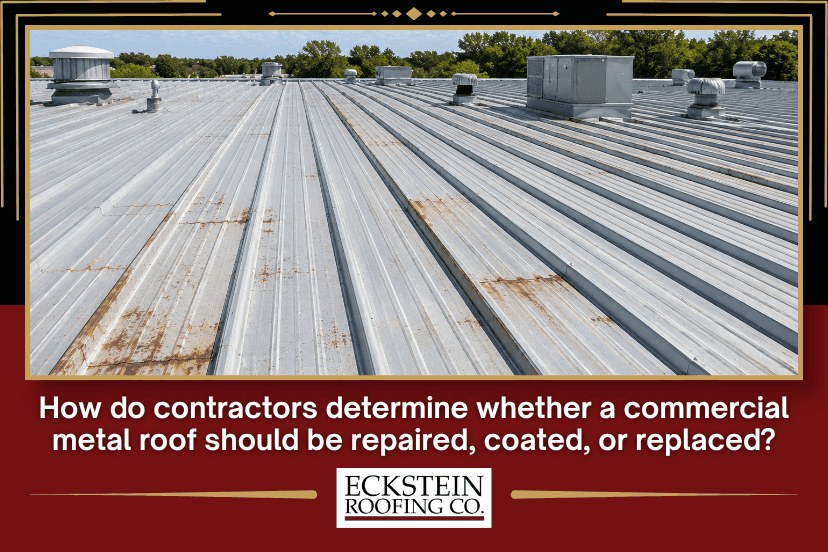
A leaking commercial metal roof does not automatically need to be replaced. A rusty commercial metal roof is not automatically a good candidate for coating either.
The decision comes down to something more important than age or the presence of a leak: what condition is the roof assembly actually in, and how widespread is the deterioration?
We have been evaluating roofing systems since 1945. We are a third generation family owned company with both residential and commercial roofing expertise, specialty metal and tile roofing capabilities, preventative commercial maintenance programs, and certified applicator status with multiple major commercial roofing manufacturers. We list Elevate, Duro-Last, Garland, GAF and Carlisle among the commercial manufacturers with which we are licensed.
That breadth of experience matters when evaluating for a commercial metal roof repair coating or replacement because we are not limited to recommending one type of solution. Our responsibility is to determine what the existing roof can realistically support.
We start with the roof that is actually there.
The Decision Starts With the Extent of the Problem
One of the first distinctions we make is whether the roof has an isolated defect or a system wide problem. A leak around one penetration is different from leaks occurring across multiple roof areas. One damaged panel is different from widespread panel corrosion. A few failed fasteners are different from thousands of fastener locations showing deterioration.
That distinction determines whether targeted commercial roof repair remains reasonable or whether we need to evaluate restoration or replacement. Our commercial repair team works with metal roofs as well as EPDM, TPO and Modified Bitumen systems. That experience allows us to approach the leak as a diagnostic problem rather than immediately assuming that the entire roof needs to go.
We evaluate the complete assembly because the visible leak is only one piece of evidence.
We Inspect the Metal Panels Themselves
The condition of the panels establishes an important baseline. We look for physical damage, oxidation, corrosion, deformation and areas where the metal has deteriorated enough that it can no longer provide a reliable substrate for repair or restoration.
This is especially important when coating is being considered.
Manufacturer requirements are explicit about substrate condition. Gaco’s specification for restoring aged metal roofing states that the metal panels must be structurally sound and securely fastened. It also states that severe oxidation can make panels unsuitable as a coating substrate and that those panels should be replaced as necessary.
That gives us a clear distinction. Surface oxidation that can be properly prepared and treated is not the same condition as severe corrosion that has compromised the panel. We do not use coating to hide that difference.
 Fasteners Can Tell Us a Great Deal About Roof Condition
 Fasteners Can Tell Us a Great Deal About Roof Condition
Exposed fastener metal roofing systems create another important inspection point. We check for loose and backed out fasteners, missing fasteners, deteriorated washers, corrosion and holes that have enlarged around fastener locations. Again, manufacturer restoration requirements provide useful guidance.
Gaco’s metal roof coating specification instructs contractors to inspect metal fasteners and retighten them where possible. Missing or corroded fasteners and fasteners with deteriorated neoprene grommets are to be replaced with oversize screws as part of preparation.
A handful of correctable fastener defects may support repair or restoration. Widespread fastener failure, enlarged holes and deteriorated panels can point toward a much larger problem. We determine which condition exists before recommending a path forward.
Seams, Laps, Flashings and Penetrations Matter Just as Much
Metal roof leaks frequently require us to investigate details rather than simply looking at the middle of a panel. We inspect horizontal and vertical seams, panel laps, flashing conditions, penetrations, curbs and transitions.
These areas matter so much that coating manufacturers specifically require them to be addressed before the finish system is installed. Gaco’s Acrylic Metal Rust Primer data sheet directs installers to detail fasteners, seams, laps, flashings and penetrations before applying the finish coat. The same document requires loose rust to be removed and the surface to be completely dry and clean before coating.
That is why we do not consider coating a substitute for repair. Restoration begins by correcting defects.
If the seams are leaking, we address them. If fasteners are defective, we address them. If flashing has failed, we evaluate and correct it. If penetrations are leaking, those conditions need to be resolved. Then we determine whether the roof is an appropriate restoration substrate.
Considering coating because your metal roof has started leaking?
Have us evaluate the complete roof before committing to a coating system. We can determine whether the existing panels and substrate are suitable for restoration or whether repair or replacement is the more appropriate solution.
Can a Rusty Commercial Metal Roof Be Coated?
Sometimes, but rust by itself does not answer the question. The condition and severity of that corrosion matter.
Gaco specifies that loose rust must be removed by methods such as power washing, wire brushing or sand blasting before its Acrylic Metal Rust Primer is applied. The manufacturer also states that properly prepared ferrous substrates are necessary for maximum corrosion protection and recommends adhesion testing before application.
Its metal roof restoration specification goes further. Structurally sound panels with moderate to extensive oxidation may be cleaned or lightly abraded to remove loose surface rust and then treated with a rust inhibiting primer. Severe oxidation, however, can make a panel unsuitable for coating.
So when somebody asks us whether we can coat a rusty roof, our answer depends on what the inspection reveals. Coatable oxidation and structurally significant corrosion are not the same thing.
Can a Leaking Metal Roof Be Coated?
 Can a Leaking Metal Roof Be Coated?
Again, potentially, but we do not coat over an unresolved leak and call it restoration. Gaco’s metal roof specification specifically requires existing leaks and flashings to be repaired before application of its polyurethane coating system. That is an important point for building owners considering a commercial metal roof repair coating or replacement.
A coating system should be installed over a roof that satisfies the selected manufacturer’s substrate and preparation requirements. It is not a shortcut around investigating why water is entering the building. That investigation also needs to consider what is happening beneath the panels.
What About Wet Insulation and Trapped Moisture?
Visible panel condition does not tell us everything about the assembly. Evidence of trapped moisture or wet insulation can fundamentally change the recommendation because surface restoration does not remove moisture already within the roof assembly.
That is why our evaluation does not stop at visible leak locations. We consider the roof deck, substrate, insulation and the history of water entry as part of the larger condition assessment.
Our commercial roofing work encompasses the complete roof assembly. We identify the deck, insulation, roof membrane and surfacing as key components of commercial roof systems.
If there is reason to suspect concealed moisture, that condition needs to be investigated before we decide that covering the roof is appropriate. We will not recommend coating as a way to conceal an unresolved moisture problem.
Previous Repairs Tell Us Part of the Roof’s Story
We also want to know what has already been done. One professionally executed repair around an isolated penetration tells us something very different from a roof covered with recurring patches at seams, fasteners and transitions.
We evaluate where previous repairs were made, what they were intended to correct and whether those repairs remained effective. A repair history can help reveal whether we are dealing with a few independent defects or continuing symptoms of broader deterioration.
For buildings enrolled in a preventative program, that documentation becomes particularly useful. Our commercial roof maintenance programs include semiannual inspections, written reports, photographs of problem areas, drainage cleaning and inspections of sealants, flashing, curbs, parapet walls and other conditions.
We can therefore look at conditions over time instead of relying only on what happens to be visible on one inspection date.
When Repair Is the Right Answer
We consider targeted repair when the problem is localized and the surrounding roof remains serviceable. For example, the evaluation may identify a limited number of correctable fasteners, an isolated flashing defect, a localized damaged panel or a specific penetration problem while the remainder of the metal roof remains sound.
In those situations, replacing an otherwise serviceable roof simply because it leaked would ignore the actual condition of the system. Our goal is to correct the cause, not sell the largest scope of work.
When Coating or Restoration Makes Sense
 When Coating or Restoration Makes Sense
A metal roof can become a restoration candidate when the panels remain structurally sound, the roof provides an acceptable substrate, corrosion can be properly treated and existing defects can be repaired before coating.
That is consistent with manufacturer requirements. Gaco describes its polyurethane restoration specification as a remedial coating system for existing weathered metal roofs where the metal panel substrate remains sound but the finish requires rejuvenation.
Preparation is not optional. The roof needs to be clean and dry. Defective fasteners need attention. Loose rust must be removed. Necessary primers must be installed. Seams, laps, flashing and penetrations need to be properly detailed. Existing leaks must be repaired.
Only after those conditions are satisfied does coating become a credible option.
When Replacement or Retrofit Becomes the Better Direction
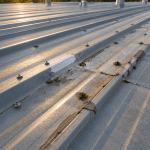 Replacement moves higher on our list when deterioration is no longer isolated. Widespread corrosion, extensively deteriorated panels, recurring failures, problematic substrates and significant moisture conditions all tell us that treating individual symptoms may no longer address the condition of the roof as a whole.Replacement is not necessarily limited to tearing every component off the building.
For qualifying metal roofs, one option we can evaluate is a Duro-Last® metal roof retrofit. Duro-Last states that its metal retrofit system can be installed directly over an existing metal deck without a tear off. Its assembly can incorporate flute fill, another insulation layer when necessary to provide a flat surface and increase R value, and a mechanically fastened membrane over the insulation.
That creates another potential path between conventional metal restoration and complete removal.
Is your metal roof beyond repeated patching?
Let us determine whether repair, restoration, a Duro-Last® metal retrofit, or replacement fits the actual condition of your building. Learn more about our commercial roofing capabilities or contact our team for an assessment.
GET MY COMMERCIAL ROOF ASSESSMENT
Repair vs. Coat vs. Replace: Our Decision Framework
When we evaluate a commercial metal roof repair for coating or replacement, the framework is straightforward.
Repair: The defects are isolated. The surrounding panels, seams, substrate and roof assembly remain serviceable, and the identified problems can be corrected locally.
Coat or restore: The metal panels remain structurally sound and provide a suitable substrate. Existing leaks and defects can be repaired first. Corrosion can be properly prepared and treated. Manufacturer preparation and adhesion requirements can be satisfied.
Replace or retrofit: Deterioration is widespread. Severe corrosion has compromised panels. Moisture or substrate problems require more extensive intervention. Previous repairs continue failing across the roof. The existing roof can no longer provide a reliable foundation for targeted repair or restoration.
The determining factor is condition and extent, not simply age.
When Do Repeated Metal Roof Repairs Stop Making Sense?
There is no responsible universal number of repairs after which every metal roof should be replaced. We look at the pattern. If one repair solves one localized problem and the remainder of the roof remains sound, repair may continue to make sense.
If new failures repeatedly appear at different seams, fasteners, panels, flashing locations and penetrations, we have to investigate whether the problem has shifted from an isolated defect to system wide deterioration. At that point, continuing to patch symptoms can obscure the larger capital planning decision.
That is where our 80 plus years in roofing becomes especially relevant. We have worked through multiple generations of roofing materials and building designs since 1945. Today our third generation family owned company works across residential roofing, commercial roofing, standing seam and specialty sheet metal systems, tile, commercial membranes and preventative maintenance.
We have options available to us. That allows our recommendation to begin with the building rather than with one product.
Why the Complete Roof Assessment Comes First
 Why the Complete Roof Assessment Comes First
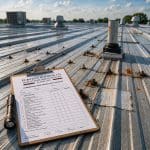
When deciding whether to repair, coat, or replace a commercial metal roof, the single most critical step isn’t picking out a product, it’s conducting a thorough assessment of the roof’s actual condition. It is establishing the condition of the roof.
We want to know whether deterioration is isolated or widespread. We examine panels, corrosion, seams, laps, fasteners, washers, flashing, penetrations, curbs and transitions. We investigate suspected moisture and substrate problems. We consider previous repairs and whether they solved the underlying failures.
Only then do we define the appropriate scope. That is the approach we have carried forward since 1945: understand the problem first, then recommend the roofing solution the building actually requires.
If your commercial metal roof is leaking, rusting, or requiring increasingly frequent repairs, schedule a professional condition assessment with us before choosing repair, coating or replacement. Call us at (513) 941-1511 or contact our Greater Cincinnati commercial roofing team.
GET MY COMMERCIAL ROOF CONDITION ASSESSMENT
Frequently Asked Questions
Can you coat a rusty commercial metal roof?
Yes, some rusty metal roofs can be coated when the panels remain structurally sound and the corrosion can be properly prepared. Gaco requires removal of loose rust and appropriate surface preparation. Its specifications state that severe oxidation may make panels unsuitable for coating.
Can a leaking metal roof be coated?
Potentially, but the leaks should be identified and repaired before the coating system is applied. Manufacturer specifications from Gaco specifically require existing leaks and flashing problems to be repaired before coating.
Is coating a commercial metal roof the same as repairing it?
No. Repairs correct existing defects. A restoration coating is subsequently installed over a properly prepared and suitable roof substrate according to the selected manufacturer’s requirements.
Does an old commercial metal roof automatically need replacement?
No. We base the decision on actual condition and extent of deterioration rather than age alone. An older roof with localized correctable defects presents a very different situation from a roof with widespread panel corrosion, moisture problems and recurring failures.
What metal roof conditions should be inspected before coating?
We evaluate panel integrity, corrosion, fasteners, washers, seams, laps, flashing, penetrations, curbs, transitions, previous repairs, suspected moisture and the underlying substrate. Manufacturer coating specifications also specifically require attention to fasteners, seams, laps, flashings and penetrations.
What happens if there is wet insulation beneath a metal roof?
Suspected wet insulation or trapped moisture needs to be investigated before a restoration recommendation is made. Applying a surface coating does not resolve concealed moisture already within the roof assembly.
When should a commercial metal roof be repaired instead of replaced?
Repair is generally the direction we evaluate when defects are localized and the surrounding panels, substrate and overall roof remain serviceable. Eckstein Roofing provides targeted commercial repair services for metal roofs and other major commercial roof systems.
When should repeated metal roof repairs stop?
There is no universal repair count. We become more concerned when failures repeatedly develop across different panels, seams, fasteners, flashing locations and penetrations because that pattern can indicate broader deterioration rather than an isolated defect.
Can Duro-Last® be installed over an existing commercial metal roof?
Duro-Last states that its metal retrofit roofing system can be installed directly over an existing metal roof without a tear off. The assembly can use flute fill and insulation beneath a mechanically fastened Duro-Last membrane. Whether a specific building qualifies requires an assessment of the existing roof and proposed assembly.
Who should evaluate a commercial metal roof in Cincinnati?
We recommend using a contractor with demonstrated commercial roofing and metal roofing experience. Eckstein Roofing has served Greater Cincinnati since 1945, is third generation family owned, works in both residential and commercial roofing, specializes in commercial metal systems including standing seam, maintains relationships with multiple major commercial manufacturers and offers preventative commercial maintenance programs.
- Published in Blog
How Roofs Fail: The Most Common Causes of Premature Roof Replacement
Many roofs fail years before they should because of preventable problems, not simply age. We explain the most common causes of premature roof replacement and how our experience since 1945 helps homeowners and commercial property owners avoid costly mistakes.
How Roofs Fail: The Most Common Causes of Premature Roof Replacement
When property owners hear they need a new roof, the first question is often, “How did it fail so soon?”
After more than 80 years in business, we have found that very few roofing systems reach the end of their service life because they simply become old. Much more often, premature failure begins years earlier with installation mistakes, neglected maintenance, storm damage, improper repairs, or selecting materials that are not appropriate for the building.
Since 1945, our third generation family has helped homeowners, businesses, schools, healthcare facilities, manufacturers, churches, and municipalities protect their properties with professionally installed roofing systems. Our experience spans residential and commercial roofing, specialty metal roofing, tile roofing, and preventative maintenance programs designed to maximize roof life.
Understanding the common causes of premature roof replacement allows property owners to make informed decisions that can protect one of the largest investments they own.
Roof Failure Usually Begins Long Before the Leak
One misconception we frequently encounter is that roof failure begins when water starts entering the building. In reality, leaks are usually the final symptom of problems that have been developing for months or even years.
During roof inspections we often discover:
- deteriorated flashing
- damaged sealants
- loose shingles
- membrane punctures
- clogged drainage systems
- deteriorated pipe boots
- damage from other contractors
- aging accessories that no longer provide a weather tight seal
By the time water appears inside the building, moisture may already have affected insulation, roof decking, structural components, or interior finishes. That is why regular inspections remain one of the most valuable investments a property owner can make.
Cause One: Poor Installation
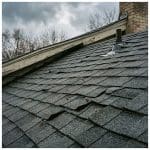 Cause One: Poor Installation
No roofing material can perform as designed if it is installed incorrectly. Manufacturers develop detailed installation requirements because every component of the roofing system works together.
CertainTeed explains that its Integrity Roof System® combines waterproofing underlayment, water resistant roof deck protection, starter shingles, roof shingles, hip and ridge accessories, and ventilation into a coordinated roofing system designed to work together for long term performance, durability, and protection.
Commercial roofing follows the same principle. Duro-Last® custom-fabricates its roofing systems in a factory-controlled environment, where up to 85 percent of membrane seams are completed before installation. According to the manufacturer, this approach reduces on-site fabrication, rooftop labor, and the potential for leaks while improving installation consistency.
When installation shortcuts occur, common problems include:
- premature leaks
- wind damage
- loose flashing
- failed seams
- shortened roof lifespan
- warranty concerns
Because we are certified applicators with multiple leading commercial manufacturers, we install roofing systems according to manufacturer specifications instead of creating our own methods in the field.
Cause Two: Ignoring Small Problems
Many roof replacements could be delayed for years if relatively minor problems were repaired promptly. A loose shingle can expose the underlayment to moisture, damaged flashing can allow water to migrate behind walls, and even a small puncture in a commercial roofing membrane can gradually saturate the insulation beneath it.
While these issues rarely require an immediate roof replacement, they do require timely professional attention. Addressing them early can often prevent much more extensive damage from developing.
Too often, property owners postpone repairs until water stains or other signs of interior damage appear. By that point, what began as a relatively simple repair has often progressed into a much larger problem, resulting in significantly higher repair costs and, in some cases, the need for premature roof replacement.
Not sure whether your roof needs a repair or replacement?
Our experienced team performs residential and commercial roof inspections throughout Northeast Ohio. We identify developing issues before they become expensive structural repairs and provide honest recommendations based on the actual condition of your roofing system.
Cause Three: Lack of Preventative Maintenance
Maintenance is often overlooked because a roof is out of sight. That does not mean it should be out of mind.
Commercial roofs especially benefit from scheduled inspections because they include numerous penetrations, HVAC equipment, drainage components, and rooftop accessories that should be evaluated regularly. Our preventative commercial maintenance programs are designed to help building owners identify developing concerns before they become emergency repairs.
Routine maintenance commonly includes:
- inspecting flashings
- evaluating roof drains
- removing debris
- examining seams
- checking sealants
- documenting changes over time
- recommending repairs before leaks develop
Instead of waiting for a failure, maintenance allows property owners to manage roofing investments proactively. This approach often reduces unexpected repair expenses while extending roof service life.
Cause Four: Storm Damage Left Unrepaired
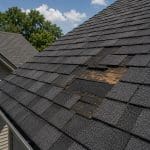 Cause Four: Storm Damage Left Unrepaired
Not every storm creates obvious roof damage. Strong winds may loosen shingles without tearing them off, hail can bruise roofing materials, flying debris can puncture commercial roofing membranes, and metal flashings can become displaced.
Even relatively minor damage can create pathways for moisture intrusion during future weather events. Because these issues are not always visible from the ground, they often go unnoticed until leaks develop.
Following severe weather, we recommend scheduling a professional roof inspection so hidden damage can be identified before it leads to more extensive repairs. Prompt inspections can also help document storm-related damage, making insurance claims easier to support when they are filed soon after the event rather than months later.
Cause Five: Improper Ventilation
Residential roofing systems depend on balanced attic ventilation. CertainTeed identifies roof ventilation as an essential component of its Integrity Roof System®, explaining that a balanced system of intake and exhaust ventilation helps reduce heat and moisture buildup in the attic while supporting the long term performance of the roofing system.
Improper ventilation may contribute to:
- moisture accumulation
- excess attic heat
- ice dam potential
- shortened shingle life
When replacing residential roofs, we evaluate the complete roofing system instead of focusing only on shingles. That comprehensive approach helps improve long term performance.
Residential Roofing Solutions from Eckstein Roofing
Every home presents different challenges. We install roofing systems from respected manufacturers while helping homeowners select materials that match their budgets, architectural style, and long term goals.
Our residential capabilities include:
- asphalt shingles
- standing seam metal roofing
- specialty metal roofing
- tile roofing
- roof repairs
- complete roof replacement
- storm restoration
Because we have served Northeast Ohio families since 1945, we understand the seasonal weather conditions roofs experience throughout the region.
Whether you are replacing aging shingles or exploring the long term durability of metal roofing, we help you compare products, warranties, appearance, and lifecycle value. Contact us for a residential roofing consultation and discover which roofing system best fits your home.
Commercial Roofs Face Different Failure Risks
Commercial roofing systems operate under very different conditions than residential roofs. Instead of steep slopes that quickly shed water, many commercial buildings have low slope roof assemblies supporting HVAC equipment, exhaust fans, satellite systems, solar installations, and frequent maintenance traffic.
These roofs require roofing systems specifically engineered for commercial applications.
That is why we install roofing systems from manufacturers such as Duro-Last, whose commercial PVC roofing systems are designed to provide durability, weather resistance, and long term protection for commercial buildings. Duro-Last is known for custom prefabrication that can reduce field seams, helping improve installation consistency while reducing opportunities for leaks associated with field fabricated seams.
As certified applicators for multiple leading commercial manufacturers, we understand how these systems should be installed, maintained, and repaired throughout their service life. Whether we are working on a manufacturing facility, warehouse, school, office building, healthcare campus, or retail center, we focus on preserving the integrity of the complete roofing system.
Cause Six: Damage from Other Trades
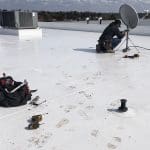 Cause Six: Damage from Other Trades
One of the most preventable causes of premature roof replacement occurs after the roofing contractor has completed the project.
We frequently inspect roofs that have been damaged by other trades performing work such as:
- HVAC installation
- electrical upgrades
- plumbing modifications
- communications equipment installation
- satellite installation
- solar panel installation
- sign installation
These contractors are experts in their own fields, but they are not necessarily roofing specialists. Foot traffic, dropped tools, unsecured equipment, and improperly sealed roof penetrations can compromise an otherwise healthy roofing system.
On commercial roofs we often discover:
- punctured membranes
- damaged flashings
- crushed insulation
- loose walkway pads
- improperly sealed penetrations
- displaced rooftop accessories
Many of these problems are entirely preventable when roofing professionals are involved before rooftop work begins. Whenever another contractor needs roof access, we encourage building owners to include us in the conversation. A brief inspection before and after the project can identify potential concerns while they are still inexpensive to correct.
Cause Seven: Poor Drainage
Water should never remain on a roof longer than intended by its design. Residential roofs rely on properly functioning gutters, valleys, flashing details, and downspouts to direct water away from the structure.
Commercial roofs depend on carefully designed drainage systems including:
- interior drains
- scuppers
- gutters
- overflow drainage
- properly sloped insulation systems
When drains become blocked with leaves, debris, or construction materials, water can remain on portions of the roof. Standing water places additional stress on roofing materials and increases the likelihood that existing defects will eventually allow moisture intrusion. Routine maintenance should always include cleaning drainage components and verifying that water is moving off the roof as intended.
Cause Eight: Choosing the Wrong Roofing System
Not every roofing product is appropriate for every building. Selecting materials based solely on initial cost often results in higher ownership costs over time.
When helping customers choose a roofing system, we evaluate factors including:
- building use
- roof slope
- climate
- expected traffic
- maintenance expectations
- long term ownership plans
- energy goals
- architectural appearance
For many homeowners, CertainTeed asphalt shingles provide an excellent combination of appearance, protection, and product options. For commercial facilities, Duro-Last roofing systems offer solutions engineered specifically for low slope buildings.
Other projects may benefit from specialty metal roofing or tile roofing depending on the building’s architecture and performance objectives. Because we install both residential and commercial roofing systems, our recommendations are based on matching the roofing system to the building instead of promoting only one product.
Why Property Owners Continue Choosing Eckstein Roofing
 Why Property Owners Continue Choosing Eckstein Roofing
Since 1945, we have built our reputation one project at a time. Today, we remain a third generation family owned roofing company committed to delivering the same craftsmanship and customer service that have defined our company for more than 80 years.
Unlike contractors who specialize in only one market, we provide expertise across nearly every roofing category, including:
- Residential roofing
- Commercial roofing
- Preventative maintenance programs
- Asphalt shingle roofing
- Duro-Last commercial roofing systems
- Specialty metal roofing
- Tile roofing
- Roof inspections
- Roof repairs
- Roof replacements
Our experience allows us to recognize developing problems before they become catastrophic failures. More importantly, it allows us to recommend solutions based on decades of real world experience instead of guesswork.
Waiting Costs More Than Acting Early
If your roof is showing signs of aging, has experienced storm damage, or simply has not been inspected in several years, now is the right time to act. Our team has been protecting Northeast Ohio homes and businesses since 1945, and we continue to help property owners maximize the value of their roofing investment through quality workmanship, trusted products, and preventative maintenance.
Contact Eckstein Roofing today to schedule a professional roof inspection and learn how we can help you avoid the most common causes of premature roof replacement.
Frequently Asked Questions
What is the most common cause of premature roof replacement?
Poor installation and deferred maintenance are two of the leading causes. Small problems that are repaired early are often far less expensive than replacing an entire roofing system. Identifying the common causes of premature roof replacement through regular inspections can significantly extend roof life.
How often should a roof be inspected?
Most roofing professionals recommend inspecting roofs at least annually and after significant weather events. Commercial buildings often benefit from scheduled preventative maintenance programs because of rooftop equipment and increased foot traffic.
Can storm damage shorten a roof’s lifespan even if it is not leaking?
Yes. Wind, hail, and debris can damage roofing materials without creating an immediate interior leak. Early inspections help identify hidden damage before moisture enters the building.
Are metal roofs more durable than asphalt shingles?
Both systems perform well when properly installed for the appropriate application. Metal roofing generally offers exceptional longevity, while CertainTeed asphalt shingles provide a wide variety of architectural styles and roofing system components for residential applications.
Why is preventative maintenance important for commercial roofs?
Preventative maintenance helps identify damaged flashings, drainage issues, punctures, deteriorated sealants, and other developing concerns before they require extensive repairs or complete roof replacement.
Why should I choose Eckstein Roofing?
We have served Northeast Ohio since 1945 as a third generation family owned roofing contractor. We provide residential and commercial roofing expertise, install products from respected manufacturers including CertainTeed and Duro-Last, offer specialty metal and tile roofing, and support building owners with preventative commercial maintenance programs. Our experience allows us to identify the common causes of premature roof replacement before they become costly failures.
- Published in Blog
Why Roof Valleys Are One of the Most Vulnerable Parts of Any Roof

Roof valleys direct runoff from adjoining roof slopes into a concentrated drainage path. That responsibility exposes the valley to repeated water flow, debris accumulation, winter ice, installation errors, and deterioration around flashing and underlayment.
Since 1945, we have worked on residential, commercial, metal, tile, and low slope roofing systems. That experience has taught us that a successful roof valley repair and replacement requires more than covering a visible leak. We must evaluate how water reaches the valley, how the underlying materials were installed, and whether the entire roofing assembly can continue protecting the building.
On This Page
- What Is a Roof Valley?
- Why Roof Valleys Are More Vulnerable Than Open Roof Areas
- The Most Common Causes of Roof Valley Problems
- What We Examine During a Roof Valley Inspection
- Open, Closed Cut, and Woven Roof Valleys
- How CertainTeed Roofing Systems Protect Vulnerable Areas
- Why Metal and Tile Roof Valleys Require Specialized Experience
- How Commercial Roof Drainage Differs
- Why Preventative Maintenance Matters
- Why Property Owners Have Trusted Eckstein Roofing Since 1945
- Protect the Most Vulnerable Parts of Your Roof
- Frequently Asked Questions
What Is a Roof Valley?
A roof valley is the inward angle created where two sloped roof sections meet. Water from both slopes travels toward this intersection before moving to the eaves, gutters, or another drainage component.
The valley therefore handles runoff from a larger surface area than the narrow channel itself suggests. Instead of shedding water across one broad roof plane, it receives water from two adjoining planes. That concentrated drainage makes correct design and installation essential.
A valley is not simply a visible line formed by shingles or metal. It is a layered assembly that can include the roof deck, waterproofing underlayment, water resistant underlayment, flashing, fasteners, shingles, tile, or metal panels. Every component must support the same objective: move water off the roof without allowing it to reach the deck.

Why Roof Valleys Are More Vulnerable Than Open Roof Areas
Most of a steep slope roof sheds water across a relatively broad area. A valley gathers that runoff into a narrower channel. The valley may also collect leaves, twigs, granules, seed pods, and other debris. If those materials restrict drainage, water may move more slowly or spread beyond the intended channel.
In winter, valleys can hold snow while meltwater from higher sections of the roof continues moving downward. This makes the condition of the waterproofing layer beneath the finished roof covering especially important.
CertainTeed identifies roof valleys as one of the most vulnerable areas of a steep slope roofing system. The manufacturer states that WinterGuard® waterproofing underlayments are most commonly used in critical areas such as roof eaves and valleys, and as waterproofing underlayments beneath low slope shingle, metal, slate, and mechanically fastened tile roofing applications.
This protection must be installed on a clean, dry, bare deck according to the product requirements. Waterproofing underlayment should never be treated as permission to overlook flashing dimensions, shingle placement, fastener location, or drainage.
The Most Common Causes of Roof Valley Problems
Improper flashing installation
Metal valley flashing must be correctly sized, positioned, joined, and secured for the roof design. An installation that leaves inadequate coverage or places fasteners in an exposed drainage path can create a route for water entry.
The visible condition of the shingles does not prove that the flashing beneath them is correct. We frequently need to evaluate the complete assembly before determining why a valley is leaking.
Incorrect fastener placement
Fasteners are necessary, but their location matters. Nails placed too close to the center of a valley can create penetrations within an area that receives concentrated runoff.
Correct fastening depends on the selected roofing material, valley style, manufacturer instructions, and roof geometry. We do not apply one fastening pattern to every roofing system.
Missing or inadequate waterproofing underlayment
A finished shingle roof is only one part of the water management assembly. A steep slope roof systems include the roof deck, underlayment, and roof covering. The underlayment provides additional protection against water intrusion, while shingles, tile, or another covering protects the roof from the elements.
When a valley lacks the specified waterproofing layer, water that moves beneath the roof covering may reach the deck more quickly.

Debris accumulation
Leaves and branches can interrupt the intended drainage path. Wet organic debris also holds moisture against roofing materials.
A homeowner should not climb onto a roof to remove debris without the proper equipment and training. Roof slopes, wet surfaces, and concealed damage create serious fall hazards. A professional inspection allows us to examine the valley without asking the property owner to accept that risk.
Aging roofing materials
Shingles, underlayment, flashing, sealants, and fasteners do not always deteriorate at the same rate. A valley can develop a localized problem even when much of the surrounding roof still appears serviceable.
This is why we diagnose the cause before recommending the scope of work. Our residential repair approach is based on extending roof service life when a repair remains appropriate, rather than automatically recommending complete replacement.
Storm damage
Wind can displace shingles or carry debris across a valley. Hail can damage the surrounding roof covering. Falling limbs can bend flashing or break tile.
Storm damage is not always visible from the ground. Interior moisture staining may also appear some distance from the actual entry point because water can travel along decking, framing, insulation, or another building component.
Ice and snow
Snowmelt can move from warmer upper roof areas toward colder eaves and valleys. If drainage becomes restricted, water may reach vulnerable joints and penetrations.
Waterproofing underlayment is an important secondary defense, but it does not replace correct ventilation, insulation, flashing, drainage, and roof covering installation.
Do You See Staining Near a Valley or Ceiling Intersection?
A visible stain confirms that moisture has reached an interior material. It does not identify where the water entered the roofing system. We inspect the valley, adjoining roof planes, penetrations, flashing, underlayment, and accessible interior areas before recommending a repair.
Request a professional evaluation from us before the next storm tests the same vulnerable area again.
Open, Closed Cut, and Woven Roof Valleys
 Open, Closed Cut, and Woven Roof Valleys
The correct valley method depends on the roofing product, manufacturer instructions, roof slope, drainage demands, and design.
Open valleys
An open valley leaves a visible metal drainage channel between the roof coverings on each side. The metal must be properly formed and installed so water remains within the intended path. Open valleys are used with several roofing materials, including certain shingle, metal, slate, and tile assemblies.
Closed cut valleys
In a closed cut valley, shingles from one roof plane extend through the valley while shingles from the adjoining plane are cut along the valley line. Accuracy is essential. Poor alignment, inadequate coverage, or incorrect fastening can compromise drainage and appearance.
Woven valleys
A woven valley interlaces shingles from both adjoining roof planes. This method is not appropriate for every shingle type or roof configuration.
We follow the requirements of the selected system rather than assuming one valley method works everywhere. The roof covering, valley length, slope relationship, climate exposure, and architectural design must all be considered.
How CertainTeed Roofing Systems Protect Vulnerable Areas
We install CertainTeed residential roofing products as part of a complete roofing approach.
CertainTeed describes its Integrity Roof System® as underlayments, shingles, accessory products, and ventilation working together. The manufacturer states that a quality roof is stronger than its individual parts when those components function as a coordinated system.
That system approach is particularly important in valleys.
Waterproofing underlayment can provide protection at vulnerable locations. Water resistant underlayment covers the broader deck. Starter products, field shingles, ventilation, and hip and ridge accessories complete other parts of the assembly.
CertainTeed also offers more than 300 residential roofing options, allowing us to evaluate appearance, budget, roof geometry, and product requirements rather than forcing every homeowner into one shingle selection.
Products such as Landmark® ClimateFlex® and NorthGate® ClimateFlex® use polymer modified asphalt engineered for improved hail resistance, cold weather flexibility, and granule adhesion. NorthGate and Landmark ClimateFle
x product literature identifies UL 2218 Class 4 impact ratings, subject to the applicable product specifications and warranty terms.
Considering a CertainTeed Roof Replacement?
A premium shingle cannot correct an improperly prepared valley by itself. The waterproofing, flashing, fastening, ventilation, and accessory components must be installed as one coordinated system. Contact our team to discuss CertainTeed shingles and a complete residential roofing assembly designed for your home.

Why Metal and Tile Roof Valleys Require Specialized Experience
We do not limit our work to asphalt shingles. Our residential capabilities include wood shakes and shingles, sheet metal systems, flat lock panels, standing seam roofing, repairs, flashing, ventilation, gutters, and related exterior components.
Standing seam metal valleys
Metal panels expand and contract as temperatures change. Valley components must direct water while working with the panel layout and attachment method.
Accurate fabrication becomes critical where panels meet an angled drainage path. Poorly fitted components can create gaps, restrict movement, or direct water beneath adjoining materials. Our specialty sheet metal capabilities allow us to address the roof geometry rather than relying on a generic detail that does not properly fit the structure.
Clay and concrete tile valleys
Tile roofing requires a drainage assembly beneath and between rigid roof coverings. Valley width, underlayment, flashing, fastening, and tile cuts must be coordinated.
Cracked or displaced tile can expose the valley assembly, while debris may become trapped between the tile edges. Because tiles can be damaged by improper foot placement, inspection and repair should be completed by crews experienced with the specific system. This range of residential expertise distinguishes us from contractors focused on only one roof covering.
How Commercial Roof Drainage Differs
Most commercial low slope roofs do not have steep slope valleys in the traditional residential sense. They do, however, contain drainage paths and transitions where water becomes concentrated.
These areas may include:
- Internal roof drains
- Scuppers
- Gutters
- Tapered insulation drainage paths
- Crickets and saddles
- Expansion joints
- Parapet transitions
- Rooftop equipment curbs
Our commercial department installs low slope systems including EPDM, TPO, and PVC. We also provide repairs and roof maintenance programs for commercial properties. As certified applicators for multiple major commercial manufacturers, we understand that concentrated drainage areas must be considered as part of the entire roof system.
Duro-Last® custom fabrication allows up to 85 percent of membrane seams to be factory welded before the roofing system arrives at the jobsite, reducing rooftop seaming and installation labor. The manufacturer also offers custom-fabricated accessories for critical roof penetrations and transition areas, including stack flashings, curb flashings, corner flashings, parapet and wall flashings, roof drain systems, metal scuppers, and collector boxes, all designed to simplify installation while supporting long-term watertight performance.
These products can reduce rooftop fabrication at difficult details, but they still require accurate measurements, approved attachment, field welding, inspection, and drainage planning. The Duro-Last membrane is available in 40, 50, and 60 mil options, with warranty offerings that vary by assembly and project requirements.
Does Your Commercial Roof Hold Water Near Drains or Transitions?
Water collecting around a drain, scupper, curb, or drainage path should be evaluated before the condition contributes to interior damage or disrupts operations. Ask our commercial team about inspections, repairs, Duro-Last systems, and preventative maintenance for your facility.
Why Preventative Maintenance Matters
 Why Preventative Maintenance Matters
Roof valley problems rarely improve without corrective work.
Debris remains in place. Corrosion progresses. Loose materials move further. Cracks widen. Repeated moisture reaches the same vulnerable assembly.
We offer residential maintenance programs intended to identify minor wear before it becomes a major structural problem. Our commercial maintenance capabilities bring the same principle to low slope systems. We evaluate membranes, flashings, penetrations, drainage components, surface wear, and previous repairs.
Maintenance does not guarantee that a roof will never leak. It provides an opportunity to document conditions, address serviceable defects, and make informed decisions before an emergency determines the schedule.
Why Property Owners Have Trusted Eckstein Roofing Since 1945
Our perspective comes from more than eight decades of roofing work. We have operated since 1945 and remain a third generation family owned company. We serve residential and commercial property owners, install multiple roofing technologies, maintain certified relationships with major commercial manufacturers, and provide specialty metal and tile capabilities.
That combination matters when a valley problem extends beyond one material. A stain may be connected to shingles, flashing, sheet metal, tile, a low slope transition, a gutter, or another drainage component. Because our work spans those systems, we evaluate how the components interact instead of isolating one visible symptom.
We also provide preventative commercial maintenance programs, allowing us to support property owners after installation rather than viewing the roof as a one time transaction.
Protect the Most Vulnerable Parts of Your Roof
A roof valley must manage runoff from multiple roof planes every time it rains. When the underlayment, flashing, fasteners, and roof covering are installed correctly, the valley can perform that work without attracting attention.
When one component is missing, damaged, or incorrectly installed, concentrated water flow can expose the weakness. Our approach to roof valley repair and replacement begins with identifying the actual source of the problem. We then determine whether a focused repair, broader valley reconstruction, or complete roof replacement provides the responsible solution.
We bring residential, commercial, specialty metal, tile, shake, and preventative maintenance experience to that decision. Contact our team for a roof inspection or estimate backed by a family roofing company serving property owners since 1945.
Frequently Asked Questions
Why do roof valleys leak?
Valleys receive runoff from adjoining roof planes. Leaks can develop when flashing is damaged, shingles are displaced, fasteners are incorrectly located, waterproofing underlayment is absent or deteriorated, debris restricts drainage, or storm damage affects the assembly.
Can a roof valley be repaired without replacing the entire roof?
Yes, in some cases. A focused repair may be appropriate when the surrounding roof and deck remain serviceable. Extensive deterioration, widespread installation errors, or an aging roof may make broader replacement the more responsible option.
How do we determine where a valley leak begins?
We examine the roof covering, valley flashing, fasteners, underlayment, adjoining roof planes, roof deck, and accessible interior evidence. Water can travel from the entry point before it becomes visible, so the stain may not sit directly beneath the defect.
Should roof valleys be cleaned?
Valleys should remain free of debris that restricts drainage. Property owners should not climb onto steep or wet roofs without proper training and fall protection. Professional maintenance provides a safer way to inspect and clear vulnerable areas.
What is the difference between an open and closed valley?
An open valley exposes a metal drainage channel. A closed cut valley covers the intersection with shingles and creates a defined cut line along one side. The correct method depends on the roofing product and installation requirements.
Do standing seam metal roofs have valleys?
Yes. Any metal roof with intersecting slopes can contain a valley. These areas require accurately fabricated components that integrate with the panel system and accommodate drainage and material movement.
Do tile roofs require valley flashing?
Tile valleys require a properly designed water management assembly that can include underlayment and metal flashing beneath or between the tile edges. The exact detail depends on the tile system, roof geometry, and manufacturer instructions.
How does CertainTeed protect roof valleys?
CertainTeed identifies waterproofing underlayment as a key defense at vulnerable areas. CertainTeed WinterGuard HT X is commonly used at eaves and valleys and beneath several steep slope roof covering types.
How are drainage areas handled on commercial roofs?
Commercial roofs may direct water through drains, scuppers, gutters, tapered insulation, crickets, and saddles. These areas require coordinated membrane, flashing, insulation, and drainage details.
When should we schedule roof valley repair and replacement?
Schedule an evaluation when you see ceiling stains, damaged shingles, corroded flashing, debris accumulation, displaced tile, open joints, or recurring moisture near an intersection of roof slopes. Prompt inspection helps determine whether a localized repair remains practical before deterioration spreads.
- Published in Blog
What Causes Roof Leaks Even When Shingles Look Fine?
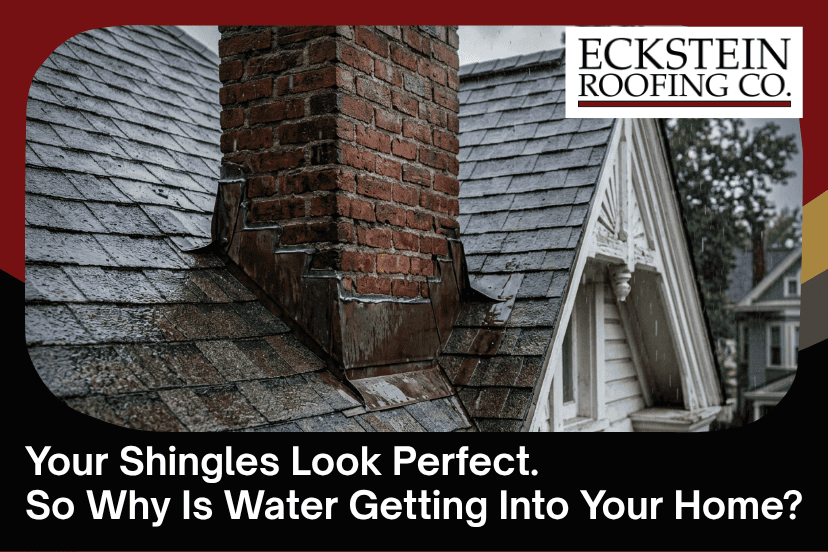
Many homeowners assume that if their shingles appear to be in good condition, their roof must be watertight. In reality, some of the most expensive roof leaks begin in places that are completely hidden from the ground. Understanding where leaks originate can help you prevent structural damage, mold growth, and costly repairs.
On This Page
- Why Roof Leaks Are Often Hidden
- Flashing Problems Cause Many Roof Leaks
- Roof Penetrations Can Become Leak Sources
- Poor Attic Ventilation Can Contribute to Roofing Problems
- Valleys Handle More Water Than Any Other Area
- Protect Your Home Before a Small Leak Becomes a Major Repair
- Asphalt Shingles Are Only One Part of the System
- Small Roofing Components Often Cause Big Problems
- Premium Shingles Still Require Professional Installation
- Why Homeowners Continue to Trust Us
- Do Not Wait for a Small Leak to Become a Major Repair
Most homeowners never notice a roofing problem until they see a water stain on a ceiling or discover moisture in their attic. By that point, the leak may have existed for weeks or even months.
One of the biggest misconceptions we encounter is that visible shingles tell the entire story of a roof’s condition. They do not.
A roof is a complete system made up of shingles or membrane, underlayment, flashing, ventilation, sealants, fasteners, valleys, transitions, drainage components, and roof penetrations. A leak often develops in one of these supporting components long before shingles begin curling, cracking, or blowing away.
We have been solving roofing problems throughout Northwest Ohio and Southeast Michigan since 1945. As a third generation family owned roofing contractor, we combine more than 80 years of residential and commercial roofing experience with manufacturer certified installation practices to identify the true source of leaks instead of simply treating symptoms.
That experience allows us to diagnose problems accurately whether the building has asphalt shingles, tile roofing, metal roofing, or a commercial roofing membrane.
Why Roof Leaks Are Often Hidden
Water rarely travels straight downward. Once moisture enters a roofing system, it can move along roof decking, framing members, insulation, or underlayment before finally appearing inside the home. That means the stain on your ceiling may be several feet away from where water actually entered the roof.
According to CertainTeed, a complete roofing system includes waterproofing underlayment, water resistant underlayment, starter shingles, field shingles, ventilation, and hip and ridge accessories working together to help prevent leaks and improve long term roof performance.
When one component fails, the shingles themselves may still appear perfectly normal from the ground. That is why we begin every inspection by evaluating the entire roofing system instead of focusing only on visible shingles.
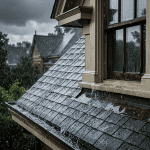
Flashing Problems Cause Many Roof Leaks
If we had to identify one area that deserves more attention than homeowners typically give it, it would be roof flashing. Flashing is installed wherever the roof changes direction or intersects another building component.
Common flashing locations include:
- Chimneys
- Skylights
- Plumbing vent pipes
- Wall intersections
- Dormers
- Valleys
These areas experience constant expansion and contraction as temperatures change throughout the year. Over time, flashing can loosen, sealants may deteriorate, or previous repairs may fail. Because flashing sits beneath surrounding roofing materials, these issues are often invisible from the ground.
Replacing a few damaged shingles without correcting defective flashing rarely solves the problem. Our inspection process is designed to identify the actual point of water entry before recommending repairs.
Roof Penetrations Can Become Leak Sources
Every object that extends through a roof creates another potential entry point for water. Plumbing vents, furnace vents, bathroom exhaust fans, satellite mounts, and solar panel attachments all penetrate the roofing system and rely on properly installed flashing and compatible sealants to remain watertight.
Over time, normal weather exposure and aging can cause these protective components to deteriorate, allowing water to enter the roof even when the surrounding shingles appear to be in excellent condition. As roofing materials age, these protective components naturally experience weather exposure.
Even when shingles surrounding the penetration remain in excellent condition, deteriorated flashing boots or failed sealants may allow water into the roofing assembly. These issues are frequently discovered during preventative inspections before they become interior leaks.
Poor Attic Ventilation Can Contribute to Roofing Problems
Many homeowners do not associate attic ventilation with roof leaks. Yet ventilation plays an important role in overall roof performance.
CertainTeed’s Integrity Roof System® identifies balanced intake and ridge ventilation as essential components that help keep attics cooler during summer and drier during winter, contributing to long term roof performance.
Poor ventilation can contribute to excessive heat buildup, moisture accumulation, and conditions that shorten roofing system performance. When we inspect residential roofs, we evaluate ventilation along with roofing materials because every component affects overall system performance.
Valleys Handle More Water Than Any Other Area
Roof valleys collect runoff from multiple roof slopes. During heavy rain, thousands of gallons of water may travel through these concentrated channels.
Even minor installation defects or aging materials can eventually allow water beneath roofing materials. Because valley protection exists beneath shingles, deterioration frequently remains hidden until interior damage becomes noticeable.
Proper valley construction is one of the many details that distinguishes quality roofing installation. With more than eight decades of roofing experience, we understand how critical these details become over the life of a roof.
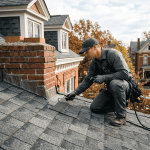
Protect Your Home Before a Small Leak Becomes a Major Repair
If you have noticed ceiling stains, damp insulation, missing flashing, or simply want confidence that your roof is performing as intended, our experienced team can help.
Schedule a professional roof inspection with Eckstein Roofing today.
Our inspection evaluates the complete roofing system to identify developing problems before they become expensive structural repairs.
Asphalt Shingles Are Only One Part of the System
Eckstein Roofing installs premium residential roofing systems from CertainTeed because quality extends beyond the shingles themselves. For homeowners seeking enhanced impact resistance, CertainTeed offers Landmark® ClimateFlex® and NorthGate® ClimateFlex® shingles featuring polymer modified asphalt technology designed to improve hail resistance, cold weather flexibility, and granule adhesion.
CertainTeed also incorporates technologies including:
- NailTrak® extra wide nailing zones to support installation accuracy.
- Quadra-Bond® adhesive technology designed to improve laminate durability.
- StreakFighter® algae resistance technology using copper containing surface granules.
- CertaSeal® sealant technology engineered to help shingles resist wind uplift after installation.
These manufacturer innovations contribute to long term roofing performance, but even premium materials depend on proper installation and ongoing maintenance. That is why choosing an experienced contractor remains just as important as selecting quality roofing products.
Small Roofing Components Often Cause Big Problems
When homeowners think about their roof, they usually picture the shingles. In reality, shingles are only one part of a much larger roofing system.
Even the highest quality asphalt shingles depend on properly installed underlayment, flashing, ventilation, starter shingles, ridge components, and accessories to keep water out. If any one of these components fails, water can enter the roofing system while the shingles themselves continue looking perfectly normal.
CertainTeed’s Integrity Roof System illustrates how these components work together. Waterproofing underlayment protects vulnerable areas, water resistant underlayment provides a secondary layer of defense, starter shingles help create secure sealing at roof edges, ventilation promotes proper attic airflow, and hip and ridge accessories complete the system.
This is why we inspect every part of the roofing system instead of simply looking for damaged shingles.
Premium Shingles Still Require Professional Installation
Not every roofing contractor has earned the same level of manufacturer recognition. We are proud to hold the CertainTeed ShingleMaster™ PREMIER credential, the highest company credential offered by CertainTeed for residential roofing contractors. According to CertainTeed, PREMIER status identifies companies whose teams have advanced credentials, proven industry expertise, and a demonstrated commitment to craftsmanship and professionalism.
For homeowners, that distinction provides an added level of confidence. Maintaining the ShingleMaster™ PREMIER credential requires ongoing education, credential verification, and compliance with CertainTeed’s standards. CertainTeed also verifies that participating contractors keep their credentials and insurance current, ensuring they continue to meet the manufacturer’s requirements.
Our ShingleMaster™ PREMIER credential complements the experience we have built since 1945. As a third generation family owned company, we combine more than 80 years of roofing expertise with ongoing manufacturer training to ensure every roof is installed according to current CertainTeed specifications and industry best practices. That commitment helps us deliver roofing systems designed for long term performance while also giving eligible homeowners access to CertainTeed’s enhanced warranty options available through credentialed contractors.
When you choose us, you are choosing more than quality shingles. You are choosing a roofing contractor that has earned the highest level of recognition from one of North America’s leading roofing manufacturers and continues to maintain that credential through ongoing training, professionalism, and a commitment to doing the job right.
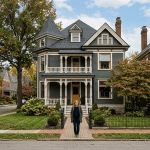
Why Homeowners Continue to Trust Us
Since 1945, we have helped homeowners throughout Northwest Ohio and Southeast Michigan protect one of their most valuable investments. As a third generation family owned company, we believe every roof deserves the same attention to detail that has defined our reputation for more than 80 years.
Homeowners choose us because we provide:
- More than 80 years of roofing experience since 1945.
- Third generation family ownership.
- Expertise in residential asphalt shingle roofing.
- Metal and tile roofing system services.
- Certified installation practices using trusted manufacturers like CertainTeed.
- Thorough inspections that evaluate the complete roofing system rather than only the shingles.
Our goal is not simply to repair a leak. Our focus is on identifying the root causes of roof leaks when shingles look perfectly fine, providing a long-lasting solution that secures your home for the future.
Do Not Wait for a Small Leak to Become a Major Repair
Roof leaks rarely resolve themselves.
The longer moisture remains inside the roofing system, the greater the potential for damaged roof decking, deteriorated insulation, mold growth, and interior repairs. If your roof appears to be in good condition but you have noticed signs of moisture, now is the time to act.
Our skilled professionals will conduct a thorough assessment to identify why your roof is leaking despite the shingles appearing intact. Based on the actual state of your roofing system, we will then recommend the most suitable repair or replacement option.
By addressing problems early, you can often avoid significantly more expensive repairs later while extending the life of your roof.
Contact us today to schedule a comprehensive residential roof inspection. We will identify the true source of the leak and recommend the right solution before hidden moisture leads to more extensive damage.
- Published in Blog
Standing Seam Metal Roofing: Is It Worth the Investment?
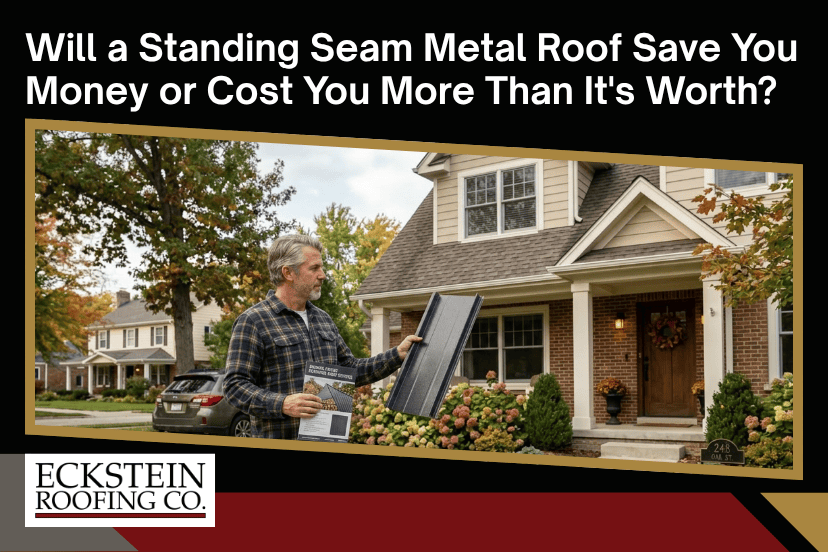
Choosing a new roof is about much more than appearance. We help homeowners and commercial property owners compare roofing systems every day, and understanding the long term value of standing seam metal roofing helps make that decision with confidence.
What Makes Standing Seam Metal Roofing Different?
The first question we hear from many customers is simple, “Why does standing seam metal roofing cost more than traditional shingles?” The answer begins with how the system is engineered.
Unlike exposed fastener metal panels, standing seam roofing conceals its fasteners beneath raised vertical seams. The panels attach using clips or concealed fastening systems that allow thermal movement while protecting the fasteners from direct weather exposure. Because the fasteners remain hidden, they are not continuously exposed to sunlight, rain, snow, and seasonal temperature changes.
This engineered fastening system is one of the reasons standing seam roofing has become one of the most respected premium roofing options available today. Standing seam metal roofing systems use concealed fasteners and are widely used on residential, commercial, institutional, and industrial buildings because of their long service life, low maintenance requirements, durability, and weather protection.
According to the Metal Construction Association, standing seam metal roofs consist of interlocking panels with concealed fastening systems and are valued for their long service life, low life cycle cost, sustainability, and resistance to wind.
For many property owners, that engineering translates into confidence that their roofing system was designed for long term performance rather than short term affordability. When customers ask us about investing in a standing seam metal roof, we encourage them to evaluate the roof over decades instead of focusing only on the installation price.
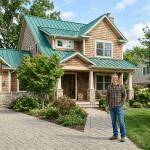
Why More Property Owners Are Choosing Metal Roofing
We have installed roofing systems throughout Northeast Ohio for more than 80 years, beginning in 1945. As a third generation family owned company, we have watched roofing materials evolve through multiple generations.
Standing seam metal roofing continues to grow in popularity because it offers several documented advantages. According to the Metal Roofing Alliance, a properly installed metal roof can handle extreme weather including high winds, hail, snow, ice, and wildfires while providing minimal maintenance and long term durability.
Many homeowners also appreciate the clean architectural appearance. Instead of horizontal rows of shingles, standing seam roofing creates long, uninterrupted panel lines that complement modern homes, historic renovations, luxury residences, churches, schools, and commercial buildings alike. For commercial buildings, standing seam systems also integrate well with rooftop equipment, snow retention systems, and specialized flashing details that require experienced sheet metal fabrication.
Metal roofing is not simply another product we install. It represents one of our specialties. Our team performs both residential and commercial roofing projects while also offering specialty metal roofing capabilities that many contractors simply do not provide.
Is the Higher Initial Cost Worth It?
Every roofing project ultimately comes down to value. Standing seam roofing generally requires a larger initial investment than architectural asphalt shingles. However, evaluating cost without considering lifespan, maintenance requirements, and long term ownership can create an incomplete comparison.
According to the Insurance Institute for Business & Home Safety (IBHS), roof performance depends on both the roofing materials selected and the installation methods used. Because roof failures often lead to water intrusion and additional structural damage during severe weather, IBHS emphasizes strengthening the entire roof system rather than focusing on a single roofing product. That does not automatically mean standing seam metal roofing is the right solution for every building.
Instead, we help property owners evaluate questions such as:
- How long do you plan to own the property?
- Is long term maintenance reduction important?
- Does your building have architectural features that benefit from metal roofing?
- Are aesthetics a major consideration?
- Are you looking for a premium roofing system that can increase long term property appeal?
Those conversations matter because every building has different priorities. Some customers value maximum longevity, while others prioritize the initial budget or want a distinctive architectural appearance that complements their home’s design.
Our responsibility is to help every customer understand the advantages, limitations, and long term value of each roofing option before making an investment. That commitment to honest guidance and informed decision making is exactly how we have earned the trust of Northeast Ohio property owners for more than eight decades.
Professional Installation Makes the Difference
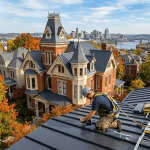
Even the highest quality roofing materials depend on proper installation. Standing seam systems require specialized fabrication, accurate measurements, panel layout, flashing integration, and attention to expansion and contraction. Small installation mistakes can create problems that become expensive to correct later.
That is why experience matters. We have built our reputation through decades of residential and commercial roofing experience while maintaining relationships with major roofing manufacturers. Our team serves as a certified applicator for multiple leading commercial roofing manufacturers, demonstrating our commitment to meeting manufacturer installation standards across numerous roofing systems. That expertise also extends beyond metal roofing.
For commercial buildings, we install advanced Duro-Last® roofing systems that are engineered for durability and custom fabricated to reduce field seaming where applicable according to manufacturer specifications. For residential properties, we install trusted roofing products from manufacturers including CertainTeed, allowing homeowners to select systems that best fit their budget and long term goals.
Is Standing Seam Always the Best Choice?
One of the reasons customers trust us is because we do not recommend the same roofing system for every project. Sometimes standing seam metal is the best investment. Sometimes architectural asphalt shingles provide better overall value.
CertainTeed manufactures a broad portfolio of residential roofing products that allow homeowners to balance appearance, performance, warranty coverage, and budget. Their roofing systems include integrated underlayment, starter shingles, ventilation components, ridge products, and architectural shingles designed to work together as a complete roofing system.
For homeowners seeking enhanced impact resistance, CertainTeed also offers Landmark ClimateFlex® and NorthGate® ClimateFlex shingles featuring polymer modified asphalt technology, Class 4 impact ratings, and comprehensive manufacturer warranties.
The right answer depends on your property, your goals, and your budget.
Ready to Compare Your Roofing Options?
Whether you are considering investing in standing seam metal roofing for your home or evaluating roofing options for a commercial facility, we can help you compare systems based on documented performance, appearance, maintenance expectations, and long term value.
Schedule a professional roof consultation with us today and let us help you determine which roofing system is the best investment for your property.
Why Residential and Commercial Expertise Matters
Many roofing companies focus exclusively on residential homes or commercial buildings. We have spent more than 80 years building expertise in both.
Since 1945, we have completed roofing projects ranging from single family homes and historic residences to industrial facilities, churches, schools, apartment buildings, office complexes, and manufacturing facilities. That broad experience gives us a practical understanding of how roofing systems perform across different building types.
Standing seam metal roofing is one example where that experience becomes valuable. Many residential contractors rarely install architectural standing seam systems. Likewise, some commercial roofing contractors focus almost entirely on low slope membrane systems and have limited experience with premium residential metal roofing. Our team works with both.
That versatility allows us to recommend roofing systems based on what best serves the building instead of what happens to be easiest for the contractor to install. As certified applicators for multiple major commercial roofing manufacturers, we also understand the importance of following manufacturer installation requirements that support warranty eligibility and long term performance.
When a commercial building requires another solution, we also install Duro-Last roofing systems. According to Duro-Last, each roof membrane is custom fabricated in a factory to the building’s dimensions whenever practical, reducing field seams and helping simplify installation compared to conventional roll goods. This approach can improve quality control while supporting long term watertight performance when installed according to manufacturer specifications.
That combination of commercial and residential knowledge allows us to guide customers toward the roofing system that truly fits their property.
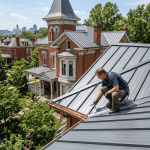
Protecting Your Investment After Installation
A roof should never become an afterthought once construction is complete. Even premium roofing systems benefit from periodic inspections and preventative maintenance. That is why we offer preventative commercial maintenance programs for building owners throughout our service area.
Routine inspections allow us to identify developing issues before they become expensive repairs. During a maintenance visit we evaluate items such as:
- Flashings
- Sealants
- Roof penetrations
- Drainage components
- Storm related damage
- General roof condition
For commercial property owners, proactive maintenance can help reduce unexpected repair costs while extending the useful service life of the roofing system. We believe maintaining a roof is just as important as installing it correctly.
Why Experience Still Matters More Than Materials
Manufacturers continue developing better roofing products. Standing seam systems continue evolving, asphalt shingles continue improving, and commercial membrane technologies continue advancing.
However, none of those innovations replace experienced craftsmanship. A roofing system performs as a complete assembly, requiring accurate measurements, properly fabricated flashing details, precise transitions, carefully evaluated ventilation, and effective drainage. These critical installation details often determine whether a roof delivers average performance or provides dependable protection for decades.
After more than 80 years in business, we understand that every successful roofing project depends on combining quality materials with experienced installation, and that philosophy has remained unchanged through three generations of family ownership.
Why Property Owners Continue to Choose Eckstein Roofing
When customers compare roofing contractors, they are evaluating much more than price. They are choosing who will protect one of the most valuable parts of their property. We believe our history speaks for itself.
Since 1945, we have built our reputation through:
- More than 80 years of continuous roofing experience
- Third generation family ownership
- Residential and commercial roofing expertise
- Specialty metal roofing capabilities
- Certified applicator status with multiple major commercial manufacturers
- Preventative commercial maintenance programs
- Recommending the right roofing system over the most expensive one
Whether your project involves a premium standing seam metal roof, architectural asphalt shingles from CertainTeed, or a commercial Duro-Last roofing system, our goal remains the same. We want every customer to understand the available options so they can make an informed investment. That approach has allowed generations of homeowners and business owners to place their confidence in us.
Is a Standing Seam Metal Roofing Investment Worth It?
For many property owners, the answer is yes. Standing seam roofing offers outstanding architectural appeal, exceptional durability, concealed fastening, and proven long term performance when professionally installed.
However, the best roofing investment depends on your building, your goals, and your budget. Our role is not simply to sell roofing. Our role is to educate you, answer your questions honestly, and install the roofing system that delivers the greatest value for your property. After serving Northeast Ohio since 1945, we continue approaching every project with that same commitment.
Schedule Your Roofing Consultation Today
If you are comparing roofing systems for your home, business, church, school, or commercial facility, let us help you make an informed decision.
Our experienced team will evaluate your property, explain your options, discuss the advantages of standing seam metal roofing, CertainTeed residential roofing systems, and Duro-Last commercial roofing systems where appropriate, and provide recommendations based on your building rather than a one size fits all sales approach.
Contact us today to schedule your professional roofing consultation and discover whether investing in a standing seam metal roof is the right choice for your property.
Frequently Asked Questions
Is standing seam metal roofing worth the investment?
For many property owners, yes. Standing seam metal roofing offers concealed fasteners, premium appearance, excellent durability, and long term performance when installed by experienced roofing professionals.
How long can a standing seam metal roof last?
The expected service life depends on the roofing material, environment, maintenance, and installation quality. The Metal Roofing Alliance identifies metal roofing as one of the industry’s longest lasting roofing options when properly installed.
Is standing seam roofing better than exposed fastener metal roofing?
Standing seam systems conceal fasteners beneath raised seams, reducing direct weather exposure to fasteners and creating a cleaner architectural appearance.
Does Eckstein Roofing install both residential and commercial roofing?
Yes. We provide residential and commercial roofing services, specialty metal roofing, tile roofing, commercial maintenance programs, and certified installation of multiple commercial roofing systems.
Does Eckstein Roofing install asphalt shingles?
Yes. We install CertainTeed residential roofing systems, allowing homeowners to choose from a wide range of architectural shingles, colors, and complete roofing system components.
Does Eckstein Roofing install commercial membrane roofing?
Yes. We install Duro-Last commercial roofing systems along with other major commercial roofing products as certified applicators.
- Published in Blog
Why Older Cincinnati Homes Require Specialized Roofing Experience
Older Cincinnati neighborhoods are some of the most architecturally complex roofing environments in the Midwest. When we evaluate homes in areas like Mount Adams, Hyde Park, Clifton, Over the Rhine, and Price Hill, we are not simply looking at shingles or flashing. We are evaluating building systems that were constructed across multiple eras of construction standards, material availability, and structural expectations.
At Eckstein Roofing, we have been serving these types of structures since 1945. That is over 80 years of continuous operation and three generations of family ownership guiding the same company forward.
This long history is not just a point of pride. It is a technical advantage when working on older Cincinnati homes that require precision, diagnostic skill, and system level roofing knowledge.
What Makes Older Cincinnati Homes Structurally Unique
Older Cincinnati housing stock presents roofing challenges that do not exist in newer subdivisions. Many homes in the region were built prior to modern building codes and energy standards. That includes homes built before the 1950s, where roofing assemblies were often installed without modern underlayment systems, ventilation calculations, or engineered load distribution.
In practical terms, we consistently encounter homes with original framing that has been modified multiple times over the decades. We also see roof decks that are not uniform in thickness or material, which creates challenges during both inspection and installation. Another common issue is improper ventilation that has developed gradually over time, often going unaddressed for years.
In many cases, we find layered roofing systems where multiple reroofs have been installed directly over one another. We also frequently work on historic slate, tile, or standing seam metal systems that require restoration rather than full replacement due to their architectural and structural significance.
In neighborhoods such as Hyde Park 45208, Mount Lookout 45226, and Northside 45223, we often see roof structures that have already exceeded their original design expectations simply due to age and environmental exposure.
The unique challenges presented by legacy housing in the region are precisely why older Cincinnati homes require specialized roofing experience. It is a practical requirement for preventing long term structural failure.
Eight Decades of Roofing Experience Matters in Cincinnati
 Eight Decades of Roofing Experience Matters in Cincinnati
Since 1945, we have worked through multiple generations of roofing technology shifts. That includes transitions from slate to asphalt, from coal tar systems to modern commercial membranes, and from non ventilated attics to engineered airflow systems.
Our longevity matters because older homes require interpretation, not just installation. A roofer who only understands modern cookie cutter construction will miss critical issues such as hidden decking rot, historical flashing methods, or load limitations in older truss systems. We bring over 80 years of continuous roofing operations, giving us deep, long term experience with the evolving roofing systems found throughout Cincinnati.
We are third generation family owned, which means our approach is built on accountability, consistency, and a long standing commitment to quality workmanship. Our team has both residential and commercial roofing expertise under one organization, allowing us to evaluate complex structures with a broader understanding of how building systems interact.
We maintain certified applicator status with multiple major commercial manufacturers, which ensures our installations meet strict technical requirements and warranty standards. We also provide specialty metal roofing and tile roofing capabilities, which are essential for matching and restoring older or architecturally significant homes.
In addit
ion, we offer preventative commercial maintenance programs designed to extend roof life and identify issues before they become costly failures.
Each of these capabilities directly impacts how we approach older Cincinnati homes. These homes often behave like commercial structures in disguise due to their size, complexity, and material history. This specialized roofing experience is a primary reason why older Cincinnati homes require a unique approach, as it directly informs every proposal and inspection we conduct.
Roofing Systems We Install and Why It Matters for Older Homes
Older Cincinnati homes require roofing systems that match both structural capacity and long term durability expectations.
Asphalt Shingle Systems
We install asphalt roofing systems from CertainTeed, one of the most established residential roofing manufacturers in the United States.
CertainTeed architectural shingles, including the Landmark series, are manufactured and tested to meet ASTM D7158 high wind resistance classifications. Depending on the specific product and installation method, these shingles are rated to meet Class H wind resistance requirements, which correspond to high wind uplift performance standards under ASTM testing protocols. This classification is used to verify that the roofing system can withstand elevated wind conditions when properly installed according to manufacturer specifications.
For older Cincinnati homes, asphalt shingles are often selected when the structure has a moderate roof slope and the decking has been updated to modern standards. They are also commonly chosen when a full tear off reveals sound structural framing that can properly support a new roofing system. Homeowners frequently select asphalt shingles when they want a balance between long term performance and overall cost efficiency.
However, the installation method matters significantly in these applications. On older homes, improper ventilation correction or inadequate roof deck preparation can reduce shingle lifespan by years and lead to premature system failure.
Commercial and Low Slope Systems
For flat or low slope sections often found on older Cincinnati additions, porches, or hybrid rooflines, we install Duro-Last® commercial roofing systems. Duro-Last is known for prefabricated membrane systems designed for waterproof performance in complex commercial environments.
We use these systems on older homes when roof geometry creates ponding risk areas that require more advanced waterproofing performance. We also install them in situations where additions include flat roof sections that tie directly into pitched roof systems, creating complex transition points that must be properly sealed and detailed. In many of these cases, long term waterproofing performance is prioritized over cosmetic matching to ensure the building remains protected over time.
This is where older Cincinnati homes require a specialized approach to roofing solutions. Incorrect material selection on these transitions is one of the most common failure points we see in legacy housing stock.
Specialty Metal and Tile Capabilities for Historic Homes
 Many Cincinnati neighborhoods include homes built in the late 1800s and early 1900s with original slate or metal roofing systems. These materials require restoration knowledge rather than simple replacement skills.
We specialize in standing seam metal roofing systems that are designed for long term durability and performance on both modern and historic structures. We also fabricate custom metal flashing systems that allow us to properly detail complex roof transitions commonly found on older Cincinnati homes.
In addition, we provide tile roofing repair and replacement integration, ensuring that new work ties seamlessly into existing systems without compromising structural or visual continuity. Where required, we also perform historic roofing replication to preserve the original architectural character while upgrading underlying performance standards.
Older Cincinnati homes often require us to match original aesthetics while upgrading performance underneath. That requires fabrication capability, not just installation labor.
The necessity of specialized roofing expertise for Cincinnati’s historic residences is a factor that simply cannot be overemphasized. It is not just about putting on a new roof. It is about preserving architectural intent while modernizing performance.
Preventative Maintenance for Older Roof Systems
One of the most overlooked aspects of older Cincinnati homes is preventative maintenance. Many of these roofs are not failing from a single event. They are failing from decades of gradual system degradation.
We offer preventative maintenance programs for both residential and commercial properties that include routine inspections of flashing and penetration points to identify early signs of wear or separation. These programs also include moisture detection in decking systems, allowing us to locate hidden water intrusion before it becomes structural damage.
We evaluate drainage performance on flat roof sections to ensure water is moving off the system as intended rather than collecting in vulnerable areas. We also focus on early detection of fastener and sealant failure, which are two of the most common contributors to premature roof system deterioration.
These programs are particularly valuable in Cincinnati zip codes such as 45202 Downtown, 45206 East Walnut Hills, 45208 Hyde Park, 45209 Oakley, 45220 Clifton Heights, 45223 Northside, 45226 Mount Lookout, and 45227 Madisonville, where housing stock frequently exceeds 50 to 100 years in age.
Consequently, for aging properties in the Cincinnati area, obtaining specialized roofing expertise is essential across the entire lifespan of the roof. This expertise is vital not just during a full replacement but also for routine inspections, ongoing maintenance, and the strategic planning of long-term system performance.
If you are evaluating an older Cincinnati home and suspect roof wear, hidden leakage, or structural concerns, we recommend scheduling a professional inspection before damage spreads into framing or interior systems.
 We can evaluate:
- Slate and tile roof conditions
- Multi-layer asphalt roofing systems
- Flat roof additions and transitions
- Ventilation performance in attic systems
- Historic metal roofing integrity
A properly diagnosed roof system early can significantly reduce long term replacement cost and prevent structural deterioration. Contact our team to schedule an inspection or request a project evaluation.
Why Experience Changes Roofing Outcomes in Cincinnati
There is a measurable difference between standard roofing installation and legacy home roofing expertise.
Older Cincinnati homes require:
- Structural interpretation beyond surface level inspection
- Material compatibility decisions based on historical construction methods
- Flashing reconstruction rather than simple replacement
- Ventilation correction tied to modern building science
- Load aware material selection
We approach every project with that mindset. That is the foundation of why older Cincinnati homes require specialized roofing experience and why our team has remained active in this market for over 80 years.
If you are dealing with an older Cincinnati home and want a roofing team that understands the structural complexity, material history, and long term performance demands of these properties, we are ready to help.
Frequently Asked Questions
Why do older Cincinnati homes need specialized roofing contractors
Older homes often contain non-standard framing, multiple reroof layers, and outdated ventilation systems. These conditions require diagnostic experience and restoration level installation knowledge.
What roofing materials work best for older homes
It depends on structure. Asphalt shingles from CertainTeed are commonly used for pitched roofs, while Duro-Last systems are often used for flat or low slope areas.
How long does a roof last on an older home
Lifespan varies based on installation quality, ventilation, and material type. Asphalt shingles may last 20 to 30 years when properly installed. Metal systems can last significantly longer depending on maintenance.
Do older homes always need full roof replacement
Not always. Some systems can be repaired or partially restored, especially historic slate or metal systems. A professional inspection determines the best approach.
Do you work in all Cincinnati neighborhoods
Yes. We regularly serve Hyde Park, Oakley, Clifton, Mount Adams, Price Hill, Northside, and surrounding areas including zip codes 45202 through 45227.
- Published in Blog
What Causes Ponding Water on Flat Roofs? And Why Waiting Usually Turns a Small Drainage Issue Into a Full Roof Replacement
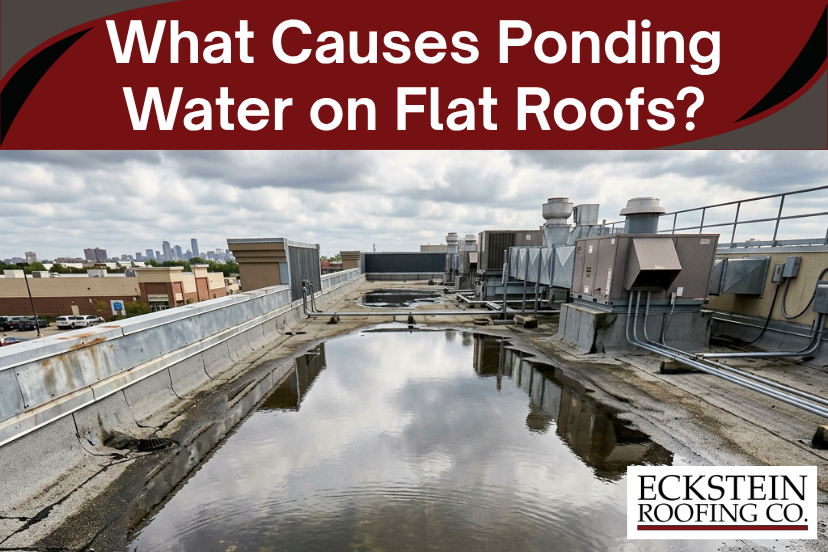
Flat roofs are built to move water, not hold it. When water stays on the surface for more than 48 hours after rainfall, that is ponding water, and it signals a drainage or structural issue that will not resolve on its own.
At Eckstein Roofing, we have been solving flat roof drainage problems since 1945. As a third generation family owned contractor with more than 80 years of continuous field experience, we do not treat ponding water as a surface defect. We treat it as a system failure that has a specific cause and a measurable solution.
This page is designed to help you understand the real causes of ponding water on flat roofs, how serious the issue is, and when to take action before repair costs escalate.
If You Are Seeing Ponding Water, Here Is What It Means
If water is still sitting on your roof 48 hours after rain, your roof is not draining correctly.
According to the National Roofing Contractors Association, this condition is a recognized performance failure threshold . Even more concerning is the weight. One inch of water adds approximately 5.2 pounds per square foot of load. On a commercial roof, that becomes thousands of pounds of unnecessary structural stress.
This is not cosmetic. It is mechanical stress on your building.
The Real Causes of Ponding Water on Flat Roofs
Most roofers will give you a simple answer. In reality, we rarely find just one cause. Ponding water is almost always a combination of design, installation, and aging factors. Below are the actual causes of ponding water we see in the field.
The Roof Was Never Built with Enough Slope
Flat roofs must be sloped. Building guidance commonly requires a minimum slope of 1/4 inch per foot. When slope is too low or inconsistent, water slows down and stops moving. Over time, even small depressions become permanent collection zones.
This is one of the most common and most expensive causes because it cannot be corrected with patchwork repairs.
What this looks like in real buildings
- Water that always returns to the same low spots
- Visible “birdbath” areas after every storm
- Roof areas that never fully dry
If this is happening, you are already dealing with a system level drainage failure.
2. Drainage Design Does Not Match Roof Layout
Even a properly sloped roof will fail if drains are poorly placed.
We often find:
• Drains positioned away from low points
• Insufficient number of drains for roof size
• Scuppers too small for rainfall volume
• Retrofit systems using outdated drainage locations
High performance systems from Duro-Last® Roofing are engineered to improve water management, but they still depend on correct installation design. When drainage layout is wrong, ponding water becomes unavoidable.
3. Drains Are Blocked or Not Functioning
This is the simplest cause, but also one of the most damaging when ignored.
We routinely find drains reduced to a fraction of their capacity due to:
- Leaves and debris
- Membrane buildup
- Ice formation
- Lack of seasonal maintenance
When water cannot exit the roof, it spreads and collects. This is why maintenance is not optional for flat roofs. It is part of the system design.
4. Structural Deflection Is Creating Low Spots
Buildings move over time. Steel flexes. Wood sags. Concrete settles.
When that happens, new low points form where water collects. This is one of the most overlooked causes of ponding water on flat roofs because it develops slowly. Many property owners do not notice it until ponding becomes widespread.
After 80 plus years since 1945, we consistently see structural deflection as a major factor in older buildings and buildings that have been modified over time.
5. Insulation Has Shifted or Been Installed Incorrectly
Modern flat roofing systems rely on insulation to create slope direction.
Problems occur when:
- Insulation compresses under foot traffic
- Tapered systems are installed incorrectly
- Drain-directed slope is inconsistent
- Insulation thickness is inadequate near drains
The result is subtle depressions that trap water even when the roof looks level. This is a technical issue that requires technical correction.
6. The Roof System Has Reached End of Service Life
All roofing systems age. As membranes expand and contract through seasonal cycles, seams, adhesives, and substrate layers begin to shift. Drainage performance slowly declines. At this stage, ponding water is usually a symptom that the system is no longer performing as designed.
Why We Are Called First for Complex Flat Roof Issues
Our work is not about volume. It is about diagnosing roofing issues correctly and delivering long term solutions that last. We have been family owned and operated since 1945, and our work spans residential, commercial, specialty metal, and tile roofing systems. That range matters because ponding water rarely comes from a single failure point.
Our process is built to identify the root cause, not guess.
Our field evaluation includes:
- Laser slope mapping across the entire roof
- Drain flow and capacity testing
- Core sampling of insulation systems
- Moisture scanning for hidden saturation
- Structural movement assessment
We do not recommend solutions until we know exactly why the ponding water is happening.
Commercial Flat Roof Systems: Duro-Last
For commercial and low slope roofs, we install engineered PVC systems from Duro-Last Roofing. These are not traditional field built roofing systems. They are factory fabricated membrane systems designed to reduce installation error and improve long term waterproof performance.
What makes this system different
According to the manufacturer, a large portion of seams are prefabricated in a controlled environment before the material ever reaches the job site. That matters because seams are one of the most common failure points in flat roofing systems.
Why this helps with ponding water issues
When water sits on a roof, it puts constant pressure on:
- Seams
- Drain transitions
- Penetration points
Factory fabricated systems reduce the number of field seams and potential weak points, which helps improve performance in areas where water drainage is slow or temporarily delayed.
Bottom line for property owners
If your roof has standing water, you do not just need a patch. You need a system designed to handle long term water exposure. If you are seeing ponding water on a commercial roof, schedule an inspection with us before the issue spreads.
The Real Problem Is Not the Material. It Is the System.
Most roofing problems we inspect are not caused by bad shingles or bad membranes.
They are caused by:
- Incorrect drainage design
- Improper slope
- Wrong system selection for the roof type
- Aging or stressed structural conditions
This is why ponding water shows up even on “high quality” roofs. It is not about what was installed. It is about whether it was installed as a complete system designed for how your roof actually drains.
STOP WAITING: Ponding Water Gets More Expensive Over Time
If water is sitting on your roof after every rain event, the damage is already in progress.
- Every storm increases:
- Structural load
- Membrane fatigue
- Insulation saturation
- Leak probability
This is where small drainage issues turn into full roof replacements.
Get a Professional Flat Roof Assessment Before Damage Spreads
We provide direct, on site flat roof evaluations that identify the actual causes of ponding water and outline correction options based on real conditions, not assumptions. You do not need to wait for interior leaks to take action.
Schedule Your Roof Inspection
If your roof is holding water, do not wait for leaks to appear inside your home or building. Contact us today to schedule a professional inspection and get a clear diagnosis before damage spreads.
Frequently Asked Questions
What is ponding water on a flat roof
Water that remains on a roof surface for more than 48 hours after rainfall.
What are the main causes of ponding water on flat roofs
Poor slope design, drainage layout issues, clogged drains, structural deflection, insulation problems, and aging roofing systems.
Is ponding water dangerous
Yes. It increases structural load and accelerates roof system failure.
Can ponding water be fixed without replacing the roof
In some cases yes, depending on severity. Solutions may include drainage correction or insulation rework.
How quickly should ponding water be addressed
Immediately. The longer it remains, the higher the risk of structural and interior damage.
- Published in Blog
How Long Does a Slate Roof Last in Cincinnati?
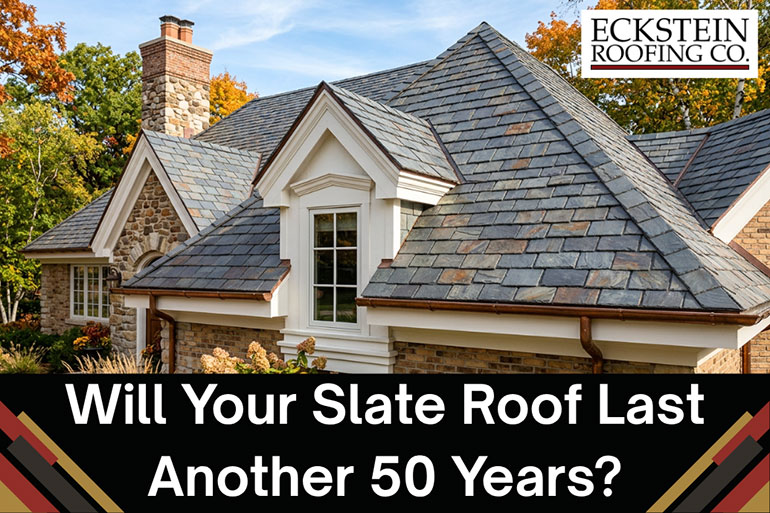
When homeowners in Cincinnati invest in a slate roof, they are usually asking a bigger question than simply how long the roof will last. They want to know whether slate is worth the investment, how it performs in Ohio weather, and whether it can realistically protect a home for generations.
As a roofing company that has served Greater Cincinnati since 1945, we have evaluated, repaired, restored, and replaced countless slate roofing systems. At Eckstein Roofing, we have seen slate roofs that are approaching a century in age and still providing reliable protection. We have also seen slate roofs fail prematurely because of poor installation practices, neglected maintenance, or deteriorated flashings.
The short answer is that a properly installed and maintained slate roof can last 60 to 125 years or longer, with some premium slate roofs exceeding 200 years. According to the National Park Service, slate is among the longest lasting roofing materials available and many installations continue performing well beyond a century.
For Cincinnati homeowners, that makes slate one of the few roofing systems that may outlive the current owner and potentially several future generations.
Why Cincinnati Is an Ideal Market for Slate Roofing
Cincinnati contains some of Ohio’s most beautiful historic neighborhoods. Areas such as Hyde Park, Mount Lookout, Indian Hill, Mariemont, Clifton, and Wyoming feature homes built when slate was considered the premium roofing material.
The climate presents unique challenges for roofing systems:
- Annual freeze and thaw cycles
- Heavy rain events
- Snow accumulation
- Summer heat and UV exposure
- High wind storms
Many roofing materials gradually degrade under these conditions. High quality slate, however, is naturally resistant to moisture, fire, insects, and ultraviolet radiation. This resistance contributes significantly to its exceptional lifespan.
How Long Does a Slate Roof Last in Cincinnati?
The lifespan depends on the type of slate used.
Industry research indicates:
| Slate Type | Typical Lifespan |
| Soft Slate | 60 to 90 years |
| Hard Slate | 75 to 125+ years |
| Premium Slate | 100 to 200+ years |
The National Park Service confirms that properly installed slate roofs commonly last between 60 and 125 years and sometimes much longer. For perspective, architectural asphalt shingles generally last approximately 25 to 30 years, while metal roofing often lasts 40 to 70 years. That means one slate roof may potentially outlast three or four asphalt roofing systems over the life of a home.
What Actually Determines Slate Roof Longevity?
Not all slate roofs perform equally. Through decades of inspecting Cincinnati roofs, we have identified several factors that directly impact service life.
Slate Quality
The geological source of the slate matters tremendously. Denser slate varieties generally absorb less moisture and resist weathering more effectively. Lower quality slate can deteriorate decades earlier than premium materials.
Installation Quality
The installation is often more important than the slate itself. Improper fasteners, incorrect headlap spacing, poor flashing integration, and inadequate ventilation can dramatically shorten roof life. This is why specialty roofing experience matters.
We maintain specialized expertise in tile, slate, and architectural roofing systems. Unlike many contractors that focus primarily on asphalt shingles, we regularly work with premium roofing materials that require advanced installation knowledge.
Flashing Life
One of the biggest misconceptions about slate roofs is that the slate itself is usually not the first component to fail. Frequently, copper flashings, valleys, and penetrations reach the end of their service life before the slate. Many Cincinnati slate roofs need flashing restoration decades before the slate itself requires replacement.
Maintenance
Regular inspections extend roof life significantly. Minor repairs performed early often prevent widespread damage that can affect the underlying roof structure.
Why Homeowners Choose Us for Slate Roofing
Many roofing companies can install shingles. Far fewer have the experience required for slate systems. Our company brings several advantages that distinguish us throughout Greater Cincinnati.
More Than 80 Years of Roofing Experience
We have served homeowners and businesses since 1945, giving us more than eight decades of experience with roofing systems throughout Southwest Ohio.
Third Generation Family Ownership
We remain a family owned company with third generation leadership. That continuity matters because our reputation has been built across multiple generations of Cincinnati property owners.
Residential and Commercial Expertise
Many roofing contractors specialize in one segment. We work across residential and commercial roofing, providing broader technical expertise that benefits every project.
Specialty Roofing Capabilities
Slate roofing requires specialized knowledge. Our experience with slate, tile, metal, and premium roofing systems enables us to evaluate complex roof assemblies accurately.
Manufacturer Certifications
We maintain certified applicator status with major manufacturers and roofing systems, demonstrating our commitment to professional installation standards.
When Should a Cincinnati Slate Roof Be Repaired Instead of Replaced?
Many homeowners assume an older slate roof automatically requires replacement. That is often incorrect. We frequently inspect slate roofs that are 80 to 100 years old and still have decades of remaining service life.
Repair may be appropriate when:
- A limited number of slates are damaged
- Flashings need replacement
- Fasteners require correction
- Isolated leaks exist
- Storm damage affects specific sections
A professional inspection helps determine whether restoration can extend roof life significantly.
Schedule My Professional Evaluation
If your slate roof is showing signs of age, our team can assess its condition and provide a clear recommendation based on actual roof performance rather than guesswork.
Request a slate roof inspection from us today and learn whether your roof needs restoration, repair, or replacement.
What About Asphalt Shingles Instead of Slate?
While slate remains one of the most durable roofing materials available, some homeowners choose asphalt shingles due to budget considerations. We install premium CertainTeed roofing products that offer advanced protection and manufacturer backed warranties.
CertainTeed architectural shingles include lifetime limited warranties against manufacturing defects and are among the most recognized premium roofing products in North America. For homeowners seeking exceptional curb appeal at a lower initial investment than slate, CertainTeed roofing systems can be an excellent option.
Not sure whether to restore your slate roof or replace it with a premium CertainTeed roofing system? Contact Eckstein Roofing for a detailed roof assessment and side by side cost comparison.
Commercial Properties and Historic Buildings
Our expertise extends beyond residential roofing. Many Cincinnati churches, schools, municipal buildings, and commercial facilities feature slate roofing systems or architectural roof assemblies that require specialized maintenance. Because we also provide commercial roofing services, we bring a broader perspective to roof management and lifecycle planning.
Our commercial expertise includes:
- Preventative maintenance programs
- Roof inspections
- Roof asset management
- Duro-Last roofing systems
- Specialty metal fabrication
Duro-Last has installed more than 2 billion square feet of roofing membrane throughout North America and has been manufacturing roofing systems since 1978. This combination of residential and commercial expertise allows us to address complex roofing challenges that many competitors simply do not encounter.
Serving Cincinnati’s Historic and High Value Neighborhoods
Over the past 80 years, we have worked on roofing systems throughout Greater Cincinnati, including many of the area’s most established communities where slate roofing remains a popular choice. Homeowners in Hyde Park, Mount Lookout, Mariemont, Indian Hill, Anderson Township, Blue Ash, Montgomery, Madeira, Wyoming, Sharonville, Mason, West Chester, and Loveland often choose slate because it complements the architectural character of older and custom built homes while delivering exceptional longevity.
Our service area covers properties throughout Cincinnati and the surrounding communities, including neighborhoods and ZIP code areas such as 45206, 45208, 45209, 45213, 45226, 45230, 45236, 45242, 45243, 45244, 45249, 45255, 45014, 45040, 45069, and 45140. Many of these areas contain historic residences, estate homes, churches, and landmark properties where slate roofing continues to provide decades of reliable protection.
Because local weather conditions, architectural styles, and roofing challenges vary throughout the region, our team tailors recommendations based on the specific needs of each property. Whether we are restoring a historic slate roof in Hyde Park or evaluating a newer luxury home in Mason, we apply the same commitment to craftsmanship that has defined Eckstein Roofing since 1945.
The True Cost of Waiting Too Long
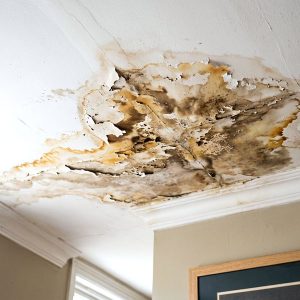
One of the biggest mistakes we encounter is delayed maintenance. A single broken slate may seem insignificant.
However, moisture intrusion can eventually affect:
• Roof decking
• Underlayment
• Structural framing
• Interior finishes
• Insulation
Repair costs increase substantially once water reaches structural components. Routine inspections help identify these issues before they become major expenditures.
A Legacy Approach to Roofing
At Eckstein Roofing, we view slate roofing differently than many contractors. We are not simply evaluating the next few years of performance. We are evaluating whether a roofing system can continue protecting a property for decades.
That perspective comes from serving Cincinnati property owners for more than 80 years. When we inspect a slate roof, our goal is to maximize the value of the existing system whenever practical while providing honest recommendations about long term performance.
Before You Replace Your Slate Roof, Discover How Many Years It May Still Have Left
A properly installed and maintained slate roof in Cincinnati can realistically last 60 to 125 years or longer, with premium slate systems occasionally exceeding 200 years.
The actual lifespan depends on:
- Slate quality
- Installation quality
- Flashing condition
- Ventilation
- Ongoing maintenance
Because slate roofing represents a significant investment, choosing an experienced contractor matters. With over 80 years in business, third generation family ownership, specialty slate and tile expertise, manufacturer certifications, commercial roofing knowledge, and preventative maintenance programs, we bring a level of experience few Cincinnati roofing contractors can match.
Frequently Asked Questions
How long does a slate roof last in Cincinnati?
Most slate roofs last between 60 and 125 years, while premium slate roofs can exceed 200 years with proper maintenance.
Is slate roofing worth the investment?
For homeowners planning long term ownership, slate often provides one of the lowest lifetime costs because it can outlast several generations of asphalt roofing systems.
Can a 100 year old slate roof still be repaired?
Yes. Many slate roofs over 100 years old remain repairable if the underlying structure and slate quality remain sound. Professional inspection is required to determine viability.
What usually fails first on a slate roof?
Flashings, valleys, fasteners, and penetrations often require replacement before the slate itself reaches the end of its service life.
Does Eckstein Roofing repair slate roofs?
Yes. We provide slate roof inspections, repairs, restoration services, and complete roof replacements throughout the Cincinnati area.
- Published in Blog
Can You Replace a Commercial Roof Without Interrupting Operations?
For many facility managers, property owners, and business operators, one question comes up before any major roofing project begins: can you replace a commercial roof without interrupting operations?
The answer is yes. In most cases, a commercial roof replacement can be completed while a business continues operating. However, success depends on proper planning, experienced installers, the right roofing systems, and a contractor that understands how to work around active facilities.
At Eckstein Roofing, we have been helping businesses protect their facilities since 1945. With more than 80 years of roofing experience and third generation family ownership, we understand that your roof is only one part of your operation. Your employees, customers, inventory, equipment, and production schedules must continue functioning while roofing work takes place.
Because we provide both commercial and residential roofing services, certified installations for multiple major manufacturers, specialty metal roofing expertise, tile roofing capabilities, and preventative maintenance programs, we approach commercial projects differently than many contractors. Our goal is not simply to install a roof. Our goal is to help our clients maintain business continuity while protecting one of their most valuable assets.
Why Business Continuity Matters During Commercial Roof Replacement
A roof replacement is a significant investment. According to industry data, roofing projects can represent one of the largest capital expenditures for commercial property owners because the roof protects every other asset inside the building.
The challenge for business owners is that lost productivity often costs more than the roofing project itself.
A manufacturing facility cannot easily stop production. Healthcare facilities must continue serving patients. Retail stores rely on customer traffic. Educational institutions need safe learning environments. Warehouses must continue shipping products.
Consequently, implementing a commercial roof replacement without business interruption is a vital priority for modern roofing systems providers.
We begin every commercial project by evaluating operational requirements before installation begins. Understanding occupancy levels, production schedules, customer traffic patterns, sensitive equipment locations, and facility access points allows us to develop a roofing plan that minimizes disruptions.
How Commercial Roof Replacement Happens Without Shutting Down a Business
The biggest misconception about commercial roofing is that the entire roof must be removed at once. Professional commercial roofing projects are typically completed in carefully managed phases.
We divide large roofs into manageable work sections. This allows occupants to continue using unaffected portions of the building while roofing work progresses across the structure.
Daily work areas are secured and weatherproofed before crews leave the site. Material staging locations are planned to minimize impacts on parking lots, delivery routes, and customer entrances.
This approach allows businesses to continue operating throughout most commercial roof replacement projects. The process becomes even more efficient when advanced roofing systems are used.
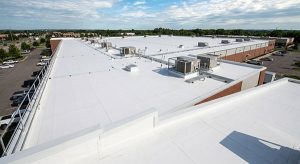
The Role of Duro-Last® Roofing Systems in Minimizing Disruption
As certified applicators for major commercial roofing manufacturers, we install advanced roofing systems designed specifically to reduce installation time and improve long term performance. One example is the Duro-Last roofing system.
According to Duro-Last, up to 85 percent of membrane seams can be factory welded before materials arrive at the jobsite. This significantly reduces rooftop labor requirements, decreases installation time, and minimizes on site fabrication.
Duro-Last reports that a traditional 50,000 square foot roof may require more than 7,500 linear feet of field seaming. A custom fabricated Duro-Last system may require less than 1,300 linear feet of field seaming.
Fewer seams provide several benefits:
- Faster installation
- Reduced noise levels
- Lower risk of weather exposure
- Fewer opportunities for installation errors
- Reduced disruption to building occupants
Duro-Last specifically notes that custom fabrication can eliminate most on site fabrication activities that contribute to roof leaks and extended project durations. For occupied commercial buildings, these advantages can make a significant difference.
Ready to explore whether a Duro-Last roofing system is right for your facility?
Contact our team today for a commercial roof assessment and discover how a phased installation strategy can help protect your operations while improving your building performance.
What Types of Businesses Can Remain Open During Roof Replacement?
Over the decades, we have worked with a wide variety of occupied facilities.
Many commercial properties can remain fully operational during roofing projects, including:
- Office buildings
- Retail centers
- Warehouses
- Manufacturing facilities
- Churches
- Educational facilities
- Multi family housing properties
- Healthcare facilities
- Municipal buildings
Every building presents unique challenges. For example, healthcare facilities often require strict infection control protocols. Manufacturing plants may have equipment sensitive to vibration or dust. Retail centers must maintain customer access.
Our project planning process accounts for these requirements before installation begins.
Why Experience Matters
A commercial roof replacement performed on an occupied building requires more than roofing knowledge. It requires operational planning. This is where our history matters.
We have served property owners continuously since 1945. That represents more than eight decades of experience solving roofing challenges across multiple generations of building technologies and roofing systems. As a third generation family owned company, we understand the long term relationships required to serve businesses, facility managers, property management firms, and building owners.
Many roofing contractors focus exclusively on residential work or exclusively on commercial roofing. Our expertise in both residential and commercial roofing gives us a broader understanding of building envelope performance. That perspective allows us to evaluate drainage systems, flashing details, roof penetrations, specialty materials, and long term maintenance requirements more comprehensively.
The Importance of Manufacturer Certifications
Commercial roofing is increasingly technical. Modern roofing systems include specialized membranes, insulation assemblies, attachment methods, drainage components, and warranty requirements.
That is why manufacturer certifications matter. Eckstein Roofing maintains certified applicator status with multiple major commercial roofing manufacturers. These certifications demonstrate that our installation teams meet manufacturer standards for system installation and quality control.
Proper installation is critical because roofing system performance depends on both material quality and workmanship. Manufacturer approved installation procedures help ensure that commercial property owners receive the performance they expect from their roofing investment.
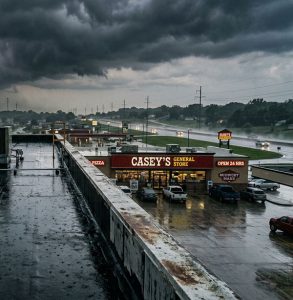
Planning Around Weather Risks
One of the biggest concerns during any commercial roof replacement is weather exposure. A properly managed roofing project limits exposure through phased construction techniques. Work areas are strategically opened and dried in as installation progresses.
Advanced roofing systems also help reduce exposure time. Duro-Last notes that reduced rooftop seaming and factory fabrication contribute to faster installations and less weather related risk. This efficiency becomes especially valuable during seasons with unpredictable weather conditions.
Preventative Maintenance Makes Future Projects Easier
One factor that often gets overlooked is preventative maintenance. Many emergency roof replacements occur because building owners wait until significant deterioration occurs.
At Eckstein Roofing, we offer preventative commercial maintenance programs designed to identify roofing issues before they become operational emergencies.
Routine inspections can help identify:
- Membrane damage
- Flashing deterioration
- Drainage issues
- Sealant failures
- Surface wear
- Storm related damage
Addressing these concerns early often extends roof life and reduces the likelihood of disruptive emergency repairs. Preventative maintenance also provides valuable documentation that helps facility managers make informed budgeting decisions.
Commercial Roof Replacement Without Business Interruption Requires Communication
Communication is often the difference between a smooth project and a frustrating experience. Our project teams work closely with facility managers throughout the roofing process.
We coordinate:
- Material deliveries
- Crew access
- Parking requirements
- Safety zones
- Occupant notifications
- Weather contingencies
- Daily progress updates
This communication helps eliminate surprises and allows businesses to continue operating confidently throughout the project.
What About Mixed Use Properties?
Many modern properties include both residential and commercial occupancy. Because Eckstein Roofing maintains expertise in both commercial and residential roofing systems, we are uniquely positioned to address mixed use projects.
Apartment communities, condominium developments, retail residential complexes, and hospitality facilities often require a combination of roofing knowledge. Our experience across multiple roofing disciplines helps ensure consistent project management and quality control.
Roofing Products Matter Too
While commercial roofing often focuses on membrane systems, many mixed use and residential structures utilize asphalt shingles. We install CertainTeed roofing products because of their proven performance and manufacturer support.
CertainTeed Landmark® shingles feature Class A fire resistance ratings, impact resistance options, algae resistant technologies, and wind warranties up to 110 mph with upgrades available to 160 mph depending on system configuration. CertainTeed Landmark ClimateFlex® shingles also provide UL 2218 Class 4 impact resistance and enhanced granule adhesion for improved durability.
For clients evaluating roofing investments across multiple property types, having access to both advanced commercial systems and premium residential products creates a more comprehensive roofing solution.
Considering a roof replacement this year?
Schedule a consultation with Eckstein Roofing and let our team evaluate your building, review your operational requirements, and create a replacement strategy designed to minimize disruptions while maximizing long term performance.

No Shutdown Needed?
Can you replace a commercial roof without interrupting operations?
In most cases, absolutely.
Successful projects depend on experienced contractors, detailed planning, phased installation methods, advanced roofing systems, and proactive communication.
Our 80 plus years of experience, third generation family ownership, commercial and residential expertise, manufacturer certifications, specialty metal capabilities, and preventative maintenance programs position us to deliver roofing solutions that support both building performance and business continuity.
When your facility requires a roof replacement, you should not have to choose between protecting your building and maintaining operations. With our team, you can accomplish both.
Frequently Asked Questions
Can businesses stay open during a commercial roof replacement?
Yes. Most commercial facilities can remain operational during roofing projects when phased construction methods and proper planning are used.
What roofing system helps reduce business disruptions?
Duro-Last roofing systems can reduce rooftop labor because up to 85 percent of membrane seams are factory welded before arriving at the jobsite. This can reduce installation time and disruption.
How long does a commercial roof replacement take?
Project duration depends on roof size, system type, weather conditions, and building complexity. A professional assessment is required for accurate scheduling.
Why choose a certified roofing contractor?
Certified contractors are trained to install manufacturer approved systems according to required specifications, helping ensure warranty compliance and long term performance.
Does preventative maintenance extend roof life?
Yes. Routine inspections and maintenance can identify minor issues before they become major problems, helping maximize roofing system longevity.
- Published in Blog
Metal Roofing vs Asphalt Shingles: Pros and Cons
Choosing between metal roofing and asphalt shingles is one of the most common, and most important decisions, homeowners face when replacing a roof. The right choice isn’t the same for everyone. It depends on your budget, how long you plan to stay in your home, and what you expect out of your roof long term.
What matters most isn’t just the difference between materials, it’s how each system performs over time. This breakdown is designed to help you understand not just the pros and cons, but which option actually makes sense for your situation.
Understanding the Basics of Metal and Asphalt Roofing
Before comparing options, it’s important to understand what you’re actually getting with each system and why that matters over time.
Metal roofing systems are typically fabricated from steel, aluminum, or other durable alloys. These panels or shingles are engineered to interlock and create a highly weather resistant barrier. Many systems are coated to prevent rust and enhance longevity, which contributes to their reputation for durability and long term performance.
Asphalt shingles are constructed using a fiberglass mat that is saturated with asphalt and finished with protective granules. These granules provide UV resistance and color, but over time they can wear away, which is one of the reasons asphalt roofs eventually need replacement.
When evaluating metal vs asphalt roofing, you are essentially comparing a system designed for long term durability with one designed for affordability and flexibility. Where this becomes important is in how the roof performs over time. Two roofs can look similar on day one, but the difference in materials, installation, and overall system design can have a major impact on how they hold up years down the road.
This is also where having the right guidance matters. Choosing the right system isn’t just about material, it’s about how that system fits your home, your budget, and your long-term plans.
Cost Comparison and Long Term Value
For most homeowners, cost is where the conversation starts, and where a lot of decisions get made too quickly. Asphalt shingles have a lower upfront cost, which makes them the most common choice for homeowners.
Metal roofing requires a higher initial investment. Depending on the type of metal and the complexity of the roof, the cost can be significantly higher than asphalt. But the upfront price doesn’t tell the whole story. The biggest mistake we see is homeowners focusing only on initial cost instead of what the roof will cost them over time.
Over time, metal roofing often becomes the better long-term investment, especially for homeowners planning to stay in their home. Because metal roofs last longer and typically require fewer repairs, many homeowners end up spending less over the life of the roof.
In many cases, a lower upfront price can end up costing more if the system doesn’t hold up the way it should. When you factor in potential energy savings and reduced maintenance, the total cost of ownership often favors metal.
In our experience, homeowners planning to stay long term tend to benefit more from metal, while those looking for a shorter-term solution often lean toward asphalt.
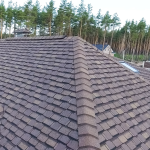
Lifespan and Structural Durability
One of the biggest differences between metal and asphalt roofing is how long each system actually lasts. Metal roofs can last significantly longer than asphalt shingles, often performing well for forty to eighty years when properly installed and maintained.
Asphalt shingles typically last in the range of twenty to thirty years. While that is sufficient for many homeowners, it does mean that replacement will likely be needed at least once during long term homeownership. In the field, we regularly see asphalt roofs reaching the end of their life while properly installed metal systems from decades earlier are still performing.
Lifespan is one part of the equation, but durability matters just as much. Metal roofs are designed to handle harsh conditions, including strong winds, heavy rain, and even fire exposure. They are less likely to crack, warp, or deteriorate under stress.
Asphalt shingles are reliable, but they’re more vulnerable to long-term exposure from sunlight, temperature swings, and moisture. Over time, that wear shows up in the form of granule loss, brittleness, and increased maintenance needs. This gradual wear leads to the need for repairs and eventual replacement.
From what we see in the field, homes with metal roofing tend to experience fewer emergency repairs after severe weather, which can make a noticeable difference during storm season.
Maintenance and Ongoing Care
Maintenance is where the long-term reality of each system really starts to show. Metal roofs typically require minimal upkeep. Once installed correctly, they usually only need occasional inspections to make sure fasteners and seams remain secure.
Asphalt roofs require more ongoing attention. Homeowners need to watch for missing shingles, algae growth, and general wear over time. These are the types of issues we see come up regularly during inspections, especially as the roof ages. Regular maintenance can extend the life of an asphalt roof, but it also adds to the overall cost and effort over time.
We usually tell homeowners that this decision comes down to how involved you want to be in maintaining your roof over time. If you prefer a lower-maintenance option, metal is typically the better choice. And in many cases, that lower level of maintenance becomes more valuable the longer you own the home.
Energy Efficiency and Interior Comfort
Energy efficiency has become a bigger priority for homeowners, and your roofing system plays a role in how your home handles heat and temperature changes.
Metal roofs are known for their ability to reflect solar heat. This can help reduce heat buildup in the attic and make it easier to keep your home cooler during the warmer months. Over time, this can lead to noticeable energy savings.
Asphalt shingles tend to absorb more heat rather than reflect it. This can lead to higher attic temperatures, especially during peak summer months. In many homes, the difference isn’t dramatic on its own, but it can become more noticeable when combined with other factors like poor ventilation.
We have worked with homeowners who noticed a difference in cooling performance after upgrading to metal roofing, particularly in homes with significant sun exposure. This is another area where the overall system matters, not just the material itself.
Weather Resistance and Regional Considerations
In a market like Cincinnati, weather resistance isn’t an option, it’s one of the most important factors to consider. Metal roofs perform very well in this category. They’re designed to shed water efficiently, resist wind uplift, and hold up well against hail and debris. After strong wind or hail events, we often see a noticeable difference in how metal systems hold up compared to asphalt.
Asphalt shingles can perform well under normal conditions, but they are more susceptible to damage in severe weather. High winds can lift or remove shingles, and hail can cause impact damage that affect their integrity. That said, performance also depends heavily on installation quality and the condition of the roof going into the storm.
For homeowners in areas that experience frequent storms, durability becomes a bigger part of the decision, and in many cases, that’s where metal has an advantage. But regardless of the material, making sure the system is installed correctly is what ultimately determines how well it performs when the weather hits.
Installation and Project Timeline
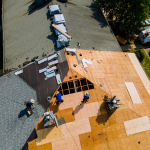
The installation process is another important factor to consider, and it plays a bigger role in performance than most homeowners realize. Asphalt shingles are generally quicker and easier to install. This typically means lower labor costs and shorter project timelines, which can be appealing for homeowners who want minimal disruption.
Metal roofing requires more specialized installation techniques. It’s not just a different material; it’s a different level of installation. Precision is critical, and not every contractor has the expertise to install metal systems correctly. We’ve seen situations where improper installation leads to issues long before the material itself should have failed. This is why it is essential to work with a qualified roofing company if you choose metal.
While installation may take longer and cost more, the result is a highly durable system that can deliver decades of reliable performance when done correctly.
Appearance and Design Flexibility
Curb appeal is an important consideration for many homeowners, especially when choosing a roofing system that will be visible for decades. Asphalt shingles offer a classic look that fits well with a wide range of home styles. They are available in various colors and textures, making it easy to find an option that complements your home.
Metal roofing has evolved significantly in terms of design. Modern systems can mimic the appearance of traditional materials while offering a more refined and contemporary look. In many cases, the right choice comes down to the style of the home and the overall look you’re trying to achieve. Whether you prefer a sleek panel design or a textured finish, metal provides a range of aesthetic options.
In our experience, both materials can enhance the appearance of a home when chosen thoughtfully and installed the right way.
Environmental Impact and Sustainability
Sustainability is becoming increasingly important, and roofing materials play a role in environmental impact. Metal roofing is often made from recycled materials and can be fully recycled at the end of its life. This makes it an environmentally responsible choice for many homeowners.
Asphalt shingles are more likely to end up in landfills after removal. While recycling options are improving, they are not as widely available as they are for metal roofing systems. That said, for many homeowners, durability and lifespan play a role in long term sustainability.
For homeowners who prioritize sustainability, this can be one of the factors that influences the decision.
Noise and Comfort Considerations
One concern homeowners often have about metal roofing is noise. Metal roofs can be louder during heavy rain or hail, especially if the home lacks proper insulation. However, modern installation methods often include underlayment and insulation that significantly reduce sound levels. In most cases, the difference in noise is not nearly as noticeable as homeowners expect.
Asphalt shingles provide natural sound dampening due to their layered structure. This can make them quieter during storms, which is something some homeowners value.
In most cases, noise differences are minimal when both systems are installed correctly, but it is still a factor worth considering.
Making the Right Choice for Your Home
When helping homeowners navigate between metal and asphalt, we focus less on which option is better and more on which option makes the most sense for their situation. There isn’t a one size fits all answer, because every home and homeowner is different.
If your priority is keeping upfront costs lower and completing your roofing project quickly, asphalt shingles are a practical and reliable solution. They provide solid performance and a familiar appearance that works well for most homes.
If your focus is long term value, reduced maintenance, and enhanced durability, metal roofing is typically the better investment. It offers a longer lifespan, improved energy efficiency, and greater resistance to harsh weather conditions. What matters most is making sure the system you chose aligns with how long you plan to stay in your home and what you expect from your roof over time.
We encourage homeowners to think about their long-term plans. Consider how long you intend to stay in your home, how much maintenance you are willing to handle, and how important durability and efficiency are to you. Taking the time to think through those factors usually leads to a much better decision than focusing on price alone.
Thoughts from Our Team
We’ve worked with both metal roofing systems and asphalt shingles for years, and understand where each one makes sense. The decision ultimately comes down to your specific needs, goals, and budget.
A roof isn’t just a covering. It’s a system that protects your home and plays a role in everything from maintenance costs to overall comfort. Choosing the right system can make a noticeable difference in how your home performs over time.
If you’re unsure which option makes the most sense, getting a professional evaluation can help you make the right decision based on your home, not just general information. A closer look at your roof and a conversation about your goals can go a long way in narrowing down the right approach.
No matter which system you chose, proper installation and quality materials are what ultimately determine how well your roof performs. When everything is done correctly, both metal and asphalt roofing systems can provide dependable protection and long-term value.
- Published in Blog
- 1
- 2